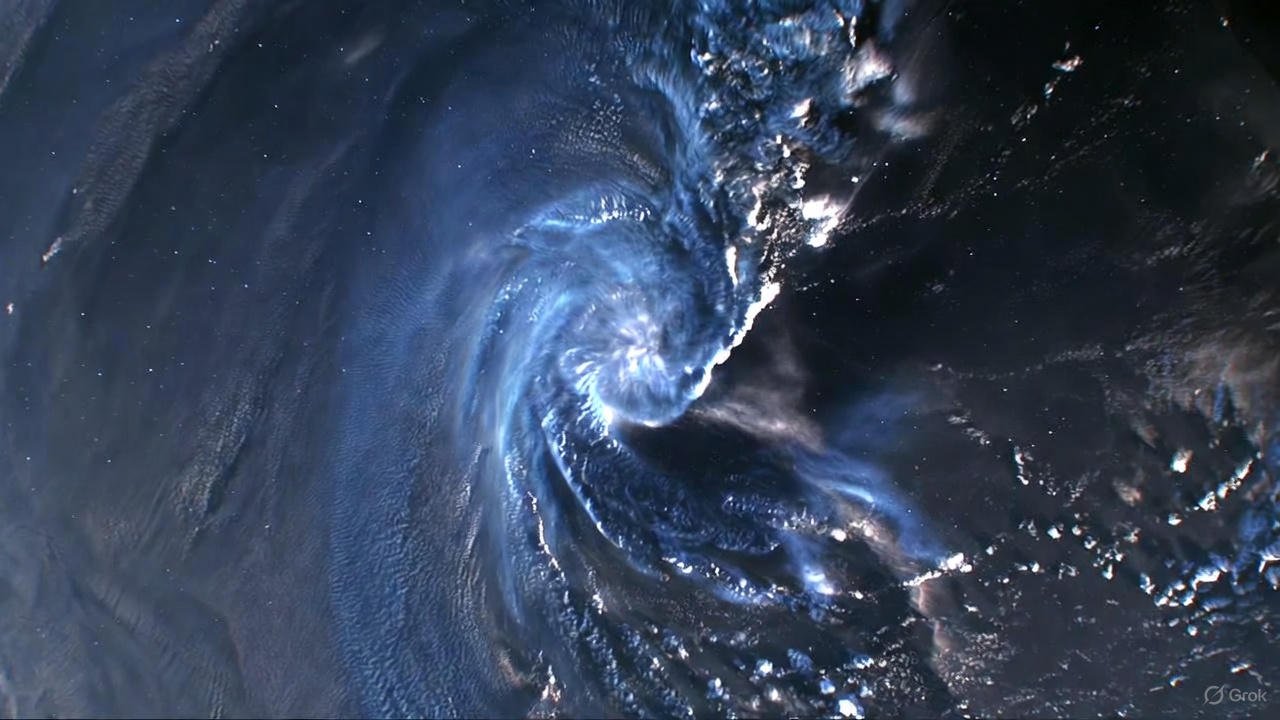
As the crisp autumn air gives way to the subtle hints of winter, meteorologists are sounding the alarm about an extraordinary atmospheric event barreling toward us. Imagine a massive whirlpool of frigid air high above the Arctic, suddenly wobbling like a top losing its spin, sending ripples of chaos down to our everyday weather. That’s the polar vortex weather forecast for late November 2025—a disruption so potent and premature that experts are calling it one of the most significant in decades for this time of year. With Thanksgiving just around the corner, this isn’t just another cold snap; it’s a harbinger of a season that could redefine how we experience the transition from fall to winter.
In the coming days, a rare phenomenon known as sudden stratospheric warming is set to fracture the polar vortex, potentially unleashing waves of arctic air across North America and beyond. Unlike the typical winter disruptions that grip headlines in January or February, this one’s timing is what makes it chilling: November events of this scale are virtually unprecedented, occurring perhaps once every quarter-century or less. As we unpack the science, the forecasts, and the far-reaching implications, one thing becomes clear—this polar vortex weather forecast demands our attention, not just for the immediate chill but for the cascading effects that could linger through the holidays and into the new year.
Understanding the Polar Vortex: Nature’s Frozen Guardian
To grasp the gravity of this upcoming shake-up, it’s essential to demystify the polar vortex itself. Picture a colossal, spinning cylinder of super-chilled air encircling the North Pole, extending from the troposphere up to the stratosphere—about 10 to 30 miles above Earth’s surface. This vortex acts like a natural barrier, trapping extreme cold within the Arctic during the long polar night, preventing it from spilling southward too aggressively.
In a stable state, the polar vortex resembles a perfectly balanced carousel, rotating counterclockwise with ferocious winds exceeding 120 mph. These stratospheric winds, invisible to the naked eye, maintain equilibrium by isolating the Arctic’s deep freeze. But when stability falters, the vortex can stretch, split, or displace southward, much like a garden hose kinking under pressure. The result? Bursts of polar air plunge into mid-latitudes, fueling everything from blizzards to record-low temperatures at the surface.
Historically, polar vortex disruptions have etched themselves into collective memory. Who could forget the “Polar Vortex” winter of 2014, when Chicago’s mercury dipped to minus 16°F, or the brutal 2019 event that blanketed the U.S. Midwest in feet of snow? Yet those were mid-season affairs. This November’s polar vortex weather forecast stands apart because it’s arriving at the vortex’s most vulnerable phase—early in the cold season, when solar radiation is still waning and the system hasn’t fully armored itself against intrusions.
The Brewing Storm: What Triggers a Disruption?
At the heart of this forecast lies sudden stratospheric warming (SSW), a counterintuitive process where temperatures in the stratosphere soar by up to 90°F in mere days. Far from a benign heatwave, SSW is driven by planetary waves—large-scale undulations in the atmosphere generated by Earth’s mountains, oceans, and uneven heating. These waves propagate upward, converging over the pole and disrupting the vortex’s winds, which slow and reverse direction.
Current models from the European Centre for Medium-Range Weather Forecasts (ECMWF) and the U.S. National Weather Service paint a vivid picture: A bulging ridge of high-pressure warmth is already nudging into the stratosphere, projected to peak around November 25-28, coinciding eerily with Thanksgiving. Zonal wind speeds at 10 hPa (a key stratospheric level) are forecasted to plummet from over 50 m/s to near zero, a textbook sign of vortex collapse. This isn’t a gentle nudge; it’s a full-scale reversal, with stratospheric temperatures potentially climbing from minus 80°F to minus 20°F in a flash.
What sets this apart from routine November chills? The magnitude. SSW events severe enough to displace the vortex entirely happen only about every two to three years, but in November? That’s rarified air. Data from the past 70 years shows fewer than five comparable instances, often linked to quirky alignments like a strong Madden-Julian Oscillation (MJO) phase or lingering effects from a La Niña pattern. In 2025, with a neutral-to-weak La Niña lingering in the Pacific, the atmosphere seems primed for this outlier.
From Stratosphere to Street Level: The Weather Ripple Effect
The magic—or menace—of the polar vortex lies in its delayed but profound influence on surface weather. Disruptions in the stratosphere don’t instantly translate to blustery days below; there’s a lag of two to four weeks as the signal cascades downward through the troposphere. During this window, the jet stream—a ribbon of high-altitude winds steering storms—becomes amplified and wavy, like a river meandering through a floodplain. This “Arctic Oscillation” shift in negative phase funnels cold air equatorward while allowing milder Atlantic or Pacific air to loop northward.
For the polar vortex weather forecast in late November 2025, expect the first tremors by November 25, with fuller impacts unfolding into early December. The Climate Prediction Center’s 8-14 day outlook already hints at below-normal temperatures across the central and northern U.S., from the Pacific Northwest to the Great Plains. As the vortex wobbles south, it could spawn a “Siberian Express” of air masses, plunging highs into the 20s and lows below zero in vulnerable spots.
Snow lovers, take note: This setup favors active weather patterns. The disrupted jet could spark a parade of low-pressure systems barreling across the country, dumping heavy precipitation. In the Midwest and Ohio Valley, where moisture from the Great Lakes converges with cold, lake-effect snow bands could pile up 1-2 feet by month’s end. Even the Southeast might see a rare flirtation with wintry mix, as isentropic lift pulls arctic fronts over warmer Gulf air.
Regional Breakdown: Who Gets Hit Hardest?
No two polar vortex events are identical, but this one’s blueprint suggests a bull’s-eye on the heartland. Let’s zoom in on key areas based on ensemble models.
Central and Northern Plains: The epicenter of the chill. From the Dakotas to Kansas, forecasts call for sustained sub-zero nights starting November 27, with wind chills flirting with minus 20°F. Blizzards aren’t off the table, especially if a clipper system rides the vortex’s edge.
Midwest and Great Lakes: Chicago and Detroit could relive 2019’s nightmare, with highs barely scraping 15°F and snowfall totals exceeding seasonal norms by 150%. Urban snowplow crews are already on alert.
Northeast and New England: A delayed but sharp drop hits post-Thanksgiving, with Boston eyeing single-digit temps and potential for 6-12 inches of snow by December 1. Coastal areas might dodge the worst, but inland valleys will feel the freeze.
Southwest and West Coast: Less dramatic, but Rocky Mountain states like Colorado could see early-season powder dumps, boosting ski resorts while challenging travel. California remains a temperate outlier, though gusty winds could whip up fire risks in dry zones.
Globally, Europe faces a mirrored threat: A weakened vortex often correlates with Scandinavian cold pools spilling into the UK and Germany, potentially disrupting holiday markets with ice and sleet. Asia, too, might contend with amplified Siberian highs.
Thanksgiving Turmoil and December’s Deep Freeze
Timing is everything, and this polar vortex weather forecast couldn’t be more Thanksgiving-timed. Long-range guidance shows a pre-holiday warmup giving way to a frontal passage on November 26-27, ushering in the cold payload. Turkey Day itself might hold mild in the East, but Black Friday shoppers in the Midwest could bundle up against northerly gales.
Looking ahead, December’s outlook tilts toward persistence. With the vortex potentially remaining displaced through mid-month, models suggest a 60-70% chance of above-normal snowfall in the northern tier and prolonged cold spells. This could strain energy grids, elevate heating costs by 15-20%, and even influence agriculture, with early frosts threatening late-harvest crops in the Corn Belt.
Historical analogs bolster this view. The 1950 November SSW led to a December that was 5°F below average across the U.S., while 1998’s early disruption sparked the infamous “Year Without a Summer” vibes in the Northeast. If 2025 follows suit, we might be in for a winter that starts with a roar, not a whisper.
Preparing for the Polar Plunge: Practical Steps
Forewarned is forearmed. As this polar vortex disruption looms, here’s how to safeguard your slice of the season:
- Home Heating: Insulate windows and doors now; stock up on emergency blankets and ensure your furnace is serviced. Expect a spike in natural gas demand.
- Travel Smart: Monitor FAA and Amtrak updates—ground delays could surge with icing. Pack winter kits for road trips: chains, sand, and a full tank.
- Health Watch: Hypothermia risks rise with wind chill; layer wisely and check on vulnerable neighbors. Hydrate even in cold—dehydration sneaks up.
- Eco Angle: This event underscores climate’s wild cards. Reducing emissions through efficient appliances can blunt long-term extremes.
Communities in the path should activate mutual aid networks, sharing resources like community warming centers.
Wrapping Up: Embracing the Arctic Awakening
The polar vortex weather forecast for November 2025 isn’t just a meteorological footnote; it’s a stark reminder of our planet’s intricate, unforgiving dance. This unprecedented disruption, fueled by stratospheric fireworks, promises to inject winter’s essence into autumn’s farewell, reshaping holidays and headlining almanacs for years. While the cold may bite, it also brings beauty—crystalline skies, muffled snowfalls, and that rare joy of a world reborn in white.
Stay tuned to reliable sources like NOAA and local NWS offices for updates, as models evolve. In the face of nature’s whims, resilience is our warmest coat. As the vortex stirs, let’s meet it not with dread, but with the quiet wonder of witnessing Earth’s grand theater unfold.