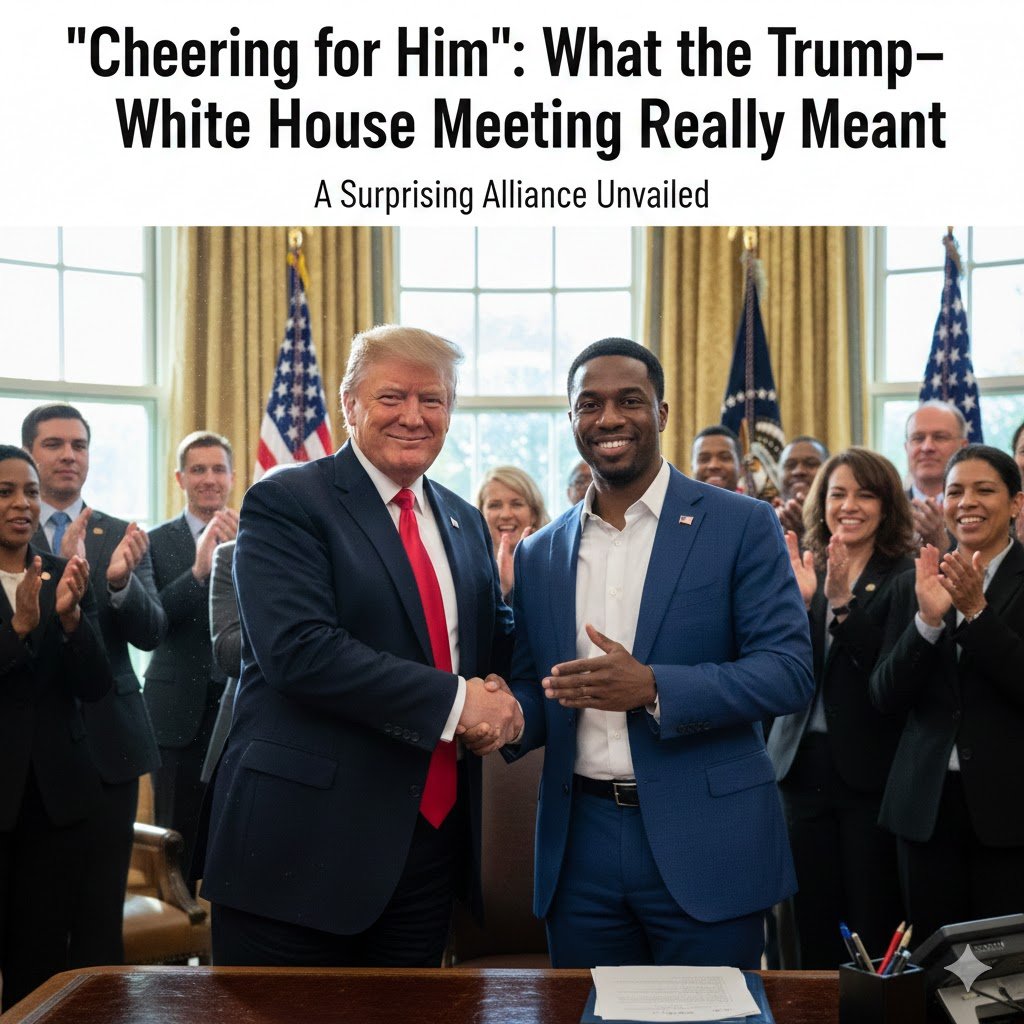
Mamdani Trump meeting on a crisp November afternoon created an unexpected political moment in the Oval Office, where former U.S. President Donald Trump and New York City mayor-elect Zohran Mamdani—two figures who previously exchanged sharp criticism—sat together in an atmosphere of warmth, cautious optimism, and surprising alignment. The encounter, heavily discussed by media outlets and closely watched by political analysts, immediately raised a pressing question: was this a genuine step toward cooperation or a strategically crafted display?
What unfolded inside the White House has already begun shaping conversations about New York City’s political future, Trump’s national ambitions, and the shifting dynamics of American politics. Here are the key takeaways from this headline-making meeting—and what they could mean moving forward.
1. The Tone Shift: From Fire to Friendly
Perhaps the most striking thing about the meeting was how drastically Trump’s rhetoric changed. During the campaign, he had publicly derided Mamdani in harsh terms. But in the Oval Office, his tone was almost paternal: warm smiles, repeated handshakes, and genuine praise. He said they agreed on “a lot more than I would have thought.”
This shift wasn’t just about optics—it signals a deliberate narrative reset for Trump. By framing the meeting as productive and friendly, he steered public attention away from conflict and toward cooperation. At a time when economic anxiety is widespread, this rebranding could be politically strategic: Trump using a high-profile engagement to lean into themes of unity and practical governance.
2. A Shared Agenda: Affordability at the Center
What brought the two men together was not ideological solidarity but a shared policy concern: cost of living. Both Trump and Mamdani emphasized how deeply they are worried about living expenses—rent, utilities, groceries—and how those worries shaped their political agendas.
Mamdani, whose campaign was built on an “affordability agenda,” made clear that he sees this meeting as an opportunity to deliver for working New Yorkers. Trump, for his part, expressed real interest in some of Mamdani’s ideas, particularly around housing. He said some of Mamdani’s proposals “are the same ideas I have.”
One of the most concrete outcomes was their discussion about Con Edison, New York’s major utility provider. The two jointly called for the company to lower its rates, arguing that fuel costs have come down but those savings haven’t been passed on to consumers. Trump insisted federal or political pressure will be needed for Con Edison to act, and Mamdani strongly agreed. This isn’t symbolic—it’s a potential policy lever that could deliver real relief to New Yorkers.
3. Respectful, but Not Subservient
Even in this remarkably cordial setting, Mamdani didn’t just roll over. He thanked Trump for the meeting, but he stayed grounded in his own vision. He made it clear that while he would lean into cooperation on affordability, he would not shy away from calling out policies he disagrees with—especially those that hurt ordinary New Yorkers.
Mamdani has made no secret of his criticisms of Trump’s record, particularly on issues like immigration and social justice. That he could bring those up, without undermining the friendly tone of the meeting, suggests a mature balance: political engagement without compromise of principle.
For his part, Trump backed him up in some sharp moments—most notably when defending Mamdani against cruel characterizations from his own party. After repeated attacks labeling Mamdani with extremist language, Trump flatly rejected one particularly harsh label, calling Mamdani “a very rational person.” That moment showed Trump was more than willing to shield Mamdani from intra-party attacks, at least in public.
4. Body Language That Mattered
The optics of the meeting reinforced the verbal warmth. Trump patted Mamdani’s arm, shook his hand multiple times, and even leaned in during their joint press moment—all signs more fitting for friends than political adversaries. Mamdani, relatively young and new to this level of power, stood beside Trump confidently, never appearing overshadowed.
That kind of non-verbal rapport builds trust. It’s one thing to agree on paper; it’s another to look relaxed and genuine in front of the cameras. For both men, these gestures were powerful signals: Trump showing he’s open to working with someone ideologically different, and Mamdani proving he belongs at the highest levels of national conversation.
5. Trump “Cheering” for Mamdani: A Surprising Promise
One of the most quoted lines from Trump came near the end, and it caught many off guard: he said he would “be out there cheering” for Mamdani’s success. That is a strong public endorsement, especially from a former president known for his combative style.
He even went further: he said he’d feel comfortable living in New York again under Mamdani’s leadership. For someone who once attacked Mamdani’s politics so fiercely, this is more than political theater—it’s a symbolic gesture of trust and maybe even a personal connection. Trump said he sees potential in Mamdani to “do something great for New York,” and offered federal help to support that.
6. Breaking From the Party Line
Another important takeaway: Trump broke with some of his own party’s rhetoric during the meeting. Before the meeting, certain Republicans had attacked Mamdani relentlessly, using charged labels. But Trump publicly rejected some of those attacks, signaling that he’s not always aligned with the harshest voices in his own party.
By defending Mamdani, Trump is sending a message: this isn’t just political posturing. He’s willing to back a man he once disparaged—and by doing so, he undercuts GOP critics who painted Mamdani as an extremist. That could weaken the case of those who viewed him simply as a radical.
7. Avoiding the Most Polarizing Issues
Not all flashpoints were on the table. Even though Mamdani has been vocal on foreign policy—especially on Gaza and U.S.-Israel relations—the meeting did not focus heavily on those controversies. Mamdani briefly mentioned human rights, but then steered the conversation back to what he cares about most: affordability.
Likewise, immigration—a perennial area of disagreement—took a backseat during their public remarks. Instead of clashing on hot-button ideological issues, both men centered the discussion on housing, energy costs, and lowering daily expenses. This restraint was clearly deliberate: by avoiding the most polarizing topics, they made the meeting about practical cooperation, not symbolic confrontation.
8. Political Gains for Both
This meeting offered something for both sides—but not without risk.
For Trump, it’s a strategic win. He redirected scrutiny away from other controversies and refocused his political narrative on affordability, a theme that resonates deeply with many Americans. By publicly aligning with Mamdani’s cost-of-living agenda, Trump wrings policy cred for himself, showing he can collaborate beyond ideological divides. It helps him look like a dealmaker, not just a firebrand.
For Mamdani, the meeting is a major legitimacy boost. He enters national stage with a powerful endorsement from a former president, and the promise of federal support gives his progressive agenda real momentum. He also gains a partner—at least in words—for his fight on utility rates and housing. For a young, rising mayor, that’s not trivial.
But there are risks too. Some of Mamdani’s supporters may view this engagement suspiciously—wondering whether he is compromising too much by cozying up to Trump. On the other hand, Republicans who opposed him may use any future failure to argue that this alliance was always superficial.
9. The Test Ahead: From Words to Action
Of course, the warm words and handshakes mean nothing unless they translate into real policy change. The big question now is: will Trump follow through? Will he actually use his influence to pressure Con Edison? Will there be concrete federal support for housing programs in New York? And will Mamdani deliver on his promises of rent relief, utility affordability, and more housing?
Both men have now raised expectations. Mamdani has put his credibility on the line by engaging so publicly. Trump, similarly, has staked political capital by backing a progressive mayor-elect. The next months will be critical: success could validate this unlikely partnership; failure could turn it into a fleeting photo op.
10. Why “Cheering for Him” Matters
The phrase “cheering for him” is deceptively simple, but deeply symbolic. It reflects something more than mere politeness—it hints at genuine investment. Trump isn’t just agreeing to be polite; he is publicly rooting for Mamdani to succeed. That is a powerful narrative: a former president supporting a man he once attacked, all because they share a vision for a more affordable New York.
For Mamdani, that cheer isn’t validation—it’s leverage. He now has someone with national reach aligning publicly with his agenda. For New Yorkers, it could mean real gains on utilities, housing, and cost-of-living. And for the broader political world, this meeting might be a signal: even political extremes can find common ground when voters’ pocketbooks are on the line.
Conclusion: A Moment of Unlikely Hope—and Caution
The Trump–Mamdani meeting was never going to erase decades of ideological differences. But it did something more subtle: it opened a door. It showed that two very different leaders can talk, agree, and potentially act to address the daily struggles of ordinary New Yorkers.
Whether this evolves into a genuine partnership or is remembered as a clever political showpiece depends on what follows. If they deliver on affordability, utility reform, and housing, this meeting could go down as a turning point. If not, it will be seen as a brief moment of mutual flattery.
Either way, Trump’s words about “cheering” for Mamdani mark a shift: not just in tone, but in possibility. In a polarized age, that might be worth watching — very closely.