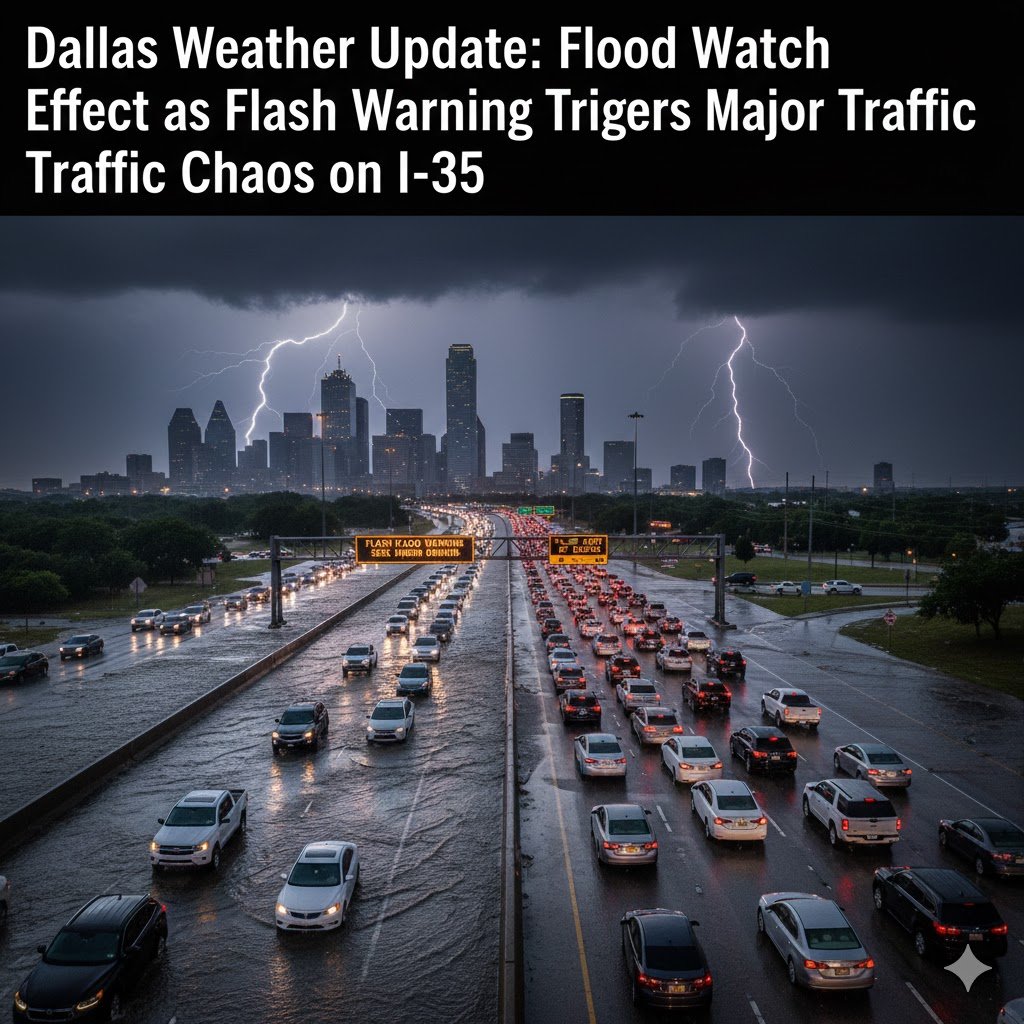
Severe weather once again gripped North Texas as Dallas experienced intense rainfall, prompting officials to issue a flash flood warning across multiple counties. What began as a typical rainy morning quickly escalated into a weather emergency, leading to dangerous driving conditions, widespread waterlogging, and massive backups on Interstate 35. For thousands of commuters, the day turned unexpectedly chaotic as rising waters created hazardous travel conditions and left vehicles stranded on major highways.
This article breaks down the latest developments, the reasons behind the flooding, what residents can expect in the coming days, and how to stay safe during such events.
Sudden Downpours Trigger Flash Flood Warning
Meteorologists had already predicted a stormy week for North Texas, but the intensity of the rainfall caught many by surprise. Early morning thunderstorms dumped several inches of rain over a short period, overwhelming the drainage systems and low-lying neighborhoods.
The National Weather Service quickly placed the region under a flash flood warning, alerting residents of imminent danger from rapidly rising water levels. A Flash Flood Warning is issued when flooding is either already occurring or is considered highly likely due to ongoing heavy rainfall. In Dallas, this warning could not have been timelier.
Within minutes, creeks began overflowing, neighborhood streets were submerged, and major roads saw water accumulation that made driving risky. As the rainfall continued, emergency crews urged people to stay indoors and avoid travel unless absolutely necessary.
I-35 Backups Highlight the Impact
Interstate 35, one of the busiest corridors in Texas, was hit particularly hard. Motorists reported long delays, with traffic brought to a standstill in several stretches. High water pooled under overpasses and low-elevation lanes, creating dangerous bottlenecks.
Many drivers were forced to take alternative routes, only to find those streets equally flooded. Some vehicles became trapped in rising water, prompting emergency teams to respond to multiple rescue calls. The ripple effect caused significant congestion on connecting roadways as well, making travel across Dallas slow and unpredictable.
The I-35 backups serve as a reminder that even a short burst of intense rainfall can paralyze major transportation routes. Authorities repeatedly urged drivers to follow the age-old safety rule: “Turn Around, Don’t Drown.”
Why Dallas is Prone to Flash Flooding
Dallas, like many fast-growing metropolitan areas, faces challenges when it comes to handling heavy rainfall. Several key factors contribute to the city’s vulnerability:
1. Rapid Urban Development
Concrete surfaces such as roads, parking lots, and buildings reduce natural absorption of water. This leads to rapid runoff, which overwhelms drainage systems during storms.
2. Low-Lying and Flat Terrain
Large parts of Dallas lie on relatively flat land, making it easier for water to accumulate rather than flow quickly toward rivers or lakes.
3. Aging Drainage Infrastructure
Some areas have outdated stormwater systems that struggle to keep up with modern rainfall patterns and population growth.
4. Climate Shifts
Recent years have seen more erratic weather patterns, including sudden downpours triggered by warm Gulf moisture interacting with atmospheric disturbances.
All these factors come together to create conditions ideal for flash flooding whenever heavy storms pass through the region.
Commuter Experiences Reflect the Urgency
Those travelling during the height of the storm shared stories that underscored the seriousness of the situation. Cars crawled at slow speeds as visibility dropped and water kept rising. Some drivers attempted to navigate through flooded lanes, while others abandoned their vehicles when engines stalled.
Public transportation also faced delays, and buses struggled with detours due to flooded intersections. For many, what is normally a routine commute turned into a stressful experience marked by uncertainty and unexpected hazards.
The widespread disruption highlights how a flash flood warning is not just a weather bulletin—it is a life-saving alert that must be taken seriously.
Emergency Crews Work Overtime
As conditions worsened, emergency responders sprang into action. Firefighters, police officers, and swift-water rescue teams were dispatched across the city to assist stranded motorists and residents trapped in flood-affected areas.
City crews worked to barricade the most dangerous roads and monitor creek levels. The Dallas Office of Emergency Management also reminded residents to report flooded areas and follow official updates.
The coordinated response helped prevent more severe injuries, though officials stressed that avoiding travel during such warnings is the best way to reduce risks.
Impact on Neighborhoods and Local Businesses
Beyond major highways, flash flooding impacted several residential areas. Neighborhood streets looked more like rivers, and some homes experienced minor water intrusion. Power outages were reported in certain pockets as falling branches and saturated soil affected electrical lines.
Local businesses in flood-prone zones faced challenges as well. Many chose to delay opening hours, while others experienced lower foot traffic due to the storm. Deliveries were disrupted, and employees struggled to reach their workplaces on time.
Though the flooding was temporary, its effects were felt across daily routines, business schedules, and community operations.
Schools and Public Services Respond to Weather Disruptions
Several school districts closely monitored the storm after the flash flood warning was issued. While most schools remained open, tardy policies were relaxed, and some districts issued advisories urging parents to allow delays for safety reasons.
Public libraries, municipal buildings, and service centers adjusted schedules and prepared for heavier demand in case residents needed emergency resources.
City officials emphasized preparedness, reminding the public that severe weather can affect services, transportation, and accessibility at any time.
What Residents Should Expect Next
With the Flood Watch still in effect, meteorologists warn that additional rounds of rainfall could worsen flooding in areas already saturated. Soil moisture remains high, and even moderate rain could lead to renewed water buildup.
Forecasts indicate:
- Continued showers and thunderstorms throughout the day
- Possible additional inches of rain
- Elevated creek and river levels
- Prolonged delays on major highways
- Slippery roads and poor visibility
Residents should remain alert and ready for updates. Officials may extend the flash flood warning if rainfall intensifies or new storms develop.
Safety Tips During a Flash Flood Warning
When a flash flood warning is issued, quick action is essential. Here are key safety reminders:
1. Avoid Driving Through Water
Even six inches of moving water can knock a person off their feet, and one foot can sweep a car away.
2. Stay Indoors When Possible
Minimizing movement reduces your risk and eases pressure on emergency responders.
3. Move to Higher Ground
If water begins to enter your home or street, relocate immediately to an elevated location.
4. Monitor Weather Alerts
Use official channels such as the National Weather Service or city emergency notifications for real-time updates.
5. Do Not Ignore Barricades
Road closures are placed for your safety; bypassing them can be extremely dangerous.
6. Prepare an Emergency Kit
Keep essentials like flashlights, batteries, medications, and bottled water ready in case conditions worsen.
These precautions can make a critical difference during severe weather events.
Long-Term Steps Toward Flood Preparedness in Dallas
While immediate response is crucial, long-term planning is equally important. Dallas has been steadily investing in improved drainage systems, creek expansion projects, and flood-control infrastructure. However, continued urban development calls for stronger strategies such as:
- Enhanced stormwater management
- Better urban planning for flood-prone zones
- Increased green spaces to absorb rainfall
- Upgraded water channels and retention areas
- Community education on emergency readiness
The city’s future resilience will depend on a combination of infrastructure, awareness, and timely action.
Community Spirit Shines Through
Despite the challenges, many Dallas residents demonstrated unity and compassion. Neighbors helped one another navigate flooded streets, assisted stranded drivers, and checked in on elderly residents. Social media was filled with offers of help, ride-sharing arrangements, and real-time updates on road conditions.
This community spirit played an important role in ensuring safety during the extreme weather.
Final Note: Stay Alert, Stay Safe
The Dallas weather situation remains dynamic, with the flash flood warning and Flood Watch reminding residents to remain cautious. As heavy rainfall continues to impact the region, authorities urge everyone to prioritize safety, avoid unnecessary travel, and closely monitor official updates.
While the storms will eventually pass, flash flooding serves as a powerful reminder of nature’s unpredictability. Staying prepared, making informed decisions, and respecting weather alerts can help protect lives and minimize damage.