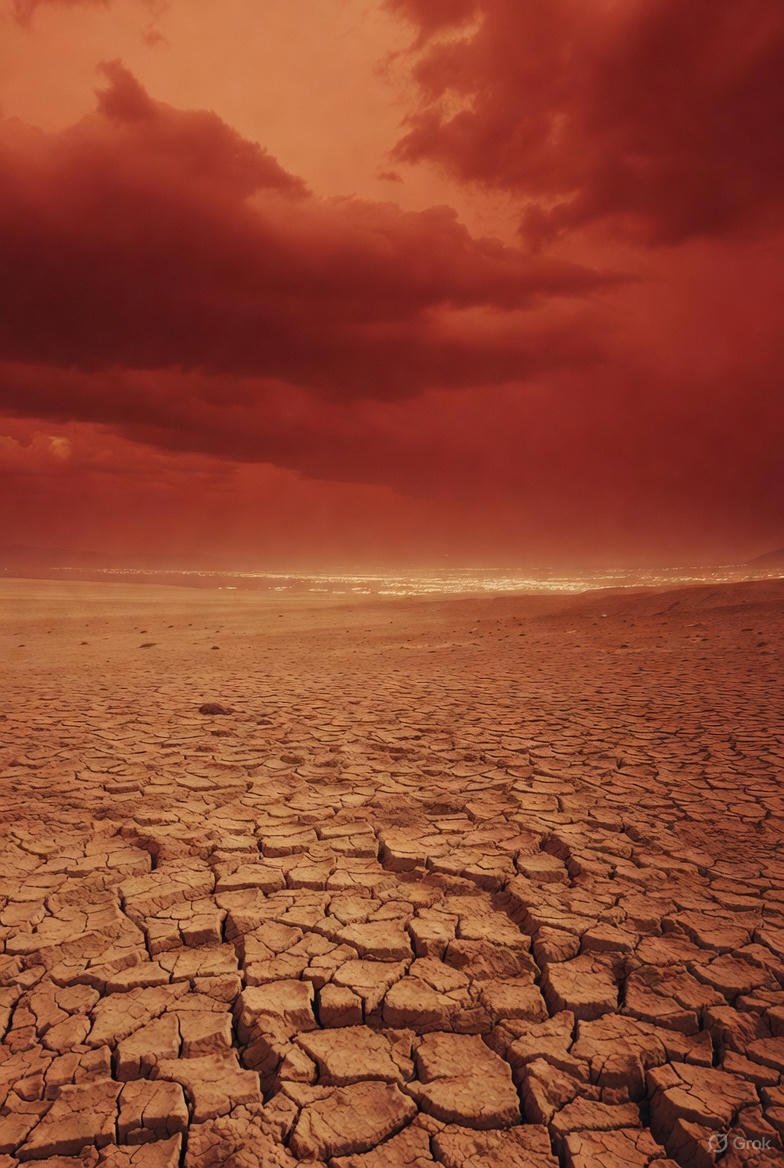
In the thick, humid air of Belém, Brazil, where the Amazon rainforest meets the city and the weight of the world’s future feels almost tangible, the 30th UN Climate Conference (COP30) is unfolding. What was meant to be a moment of renewed global commitment has instead become the stage for one of the most sobering warnings in climate history.
A fresh report released this month by the independent Climate Action Tracker has confirmed something truly alarming: humanity is currently on course for 2.6°C of warming by 2100. That number isn’t just another decimal point in a long line of projections. It is now the most dangerous “world record” ever documented, a temperature rise that would push the planet far beyond the limits agreed in Paris a decade ago.
Bill Hare, CEO of Climate Analytics and one of the lead authors behind the analysis, put it bluntly during the briefing in Belém: “A world at 2.6 degrees means global disaster. That means the end of agriculture in the UK and large parts of Europe, drought and monsoon failure across Asia and Africa, lethal heat and humidity in many regions. This is not a good place to be. You want to stay away from that.”
Those words have echoed across headlines and social media for days, and for good reason. Ten years after the Paris Agreement was signed with tears, applause and genuine hope, the world has failed to bend the emissions curve downward in any meaningful way. If every country delivered exactly what it has promised today, and no more, we would still overshoot the 1.5°C target by a full degree and the “well below 2°C” guardrail by more than half a degree.
We have already warmed the planet by roughly 1.2°C since the late 1800s. The last twelve months were the hottest ever recorded. Heatwaves killed thousands in Europe and India this year alone. Floods drowned entire districts in Spain and Pakistan. Wildfires turned the sky orange from California to Greece. And yet, despite all the visible evidence, the global trajectory has not improved since last year’s assessment. In fact, in some areas it has quietly worsened.
The 2.6°C path is built on the actual policies countries have in place right now, not on their glossy speeches or distant 2050 “net-zero” dreams. China is still adding coal plants. India’s energy demand is skyrocketing and being met largely with coal. The United States has cut emissions in the power sector but transport and industry keep rising. Europe is doing better than most, yet even the EU’s current measures fall short of its own 2030 targets. Brazil, the host of this very COP, is struggling to stop Amazon deforestation from surging again under economic pressure.
When you add it all up, the picture is grim: no major economy is yet on a true 1.5°C-compatible pathway. A handful, such as the United Kingdom, Kenya, and Chile, are rated “almost sufficient.” The rest range from “insufficient” to “critically insufficient.” That is the polite scientific language for “we are sleepwalking into catastrophe.”
So what does a 2.6°C world actually feel like?
It feels like London recording 40°C for weeks in summer, turning the city into an oven and making outdoor work deadly. It feels like the breadbasket of Punjab and Haryana seeing crop yields collapse as monsoon rains become erratic and groundwater vanishes. It feels like Mumbai, Kolkata, and Dhaka facing regular storm surges that flood entire neighbourhoods because sea levels have risen nearly half a metre faster than expected.
It feels like the coral reefs, already ghosts of their former beauty, dying completely and taking with them fisheries that feed hundreds of millions. It feels like the Amazon flipping from carbon sink to carbon source, releasing billions of tonnes of stored carbon and accelerating warming even further. It feels like parts of the Middle East and South Asia crossing the threshold where the human body simply cannot cool itself in the open air, no matter how much water you drink.
Scientists call that threshold a wet-bulb temperature of 35°C. At that point, even perfectly healthy people sitting in the shade die within hours. In today’s climate, that happens rarely and only in a few spots. At 2.6°C, it becomes a regular summer occurrence across huge swathes of India, Pakistan, the Gulf states, and parts of China. Hundreds of millions would have to migrate or find a way to live indoors with constant air conditioning, something neither affordable nor possible for most.
Agriculture would be hit hardest of all. Wheat, rice, and maize, the three crops that feed the world, are extraordinarily sensitive to heat. Studies show that every degree of warming reduces global yields of wheat by about 6%, rice by 3%, and maize by 7%. At 2.6°C, that translates into hundreds of millions more people facing hunger, even as populations continue to grow.
In Europe, the Mediterranean is projected to become semi-arid. Olive groves and vineyards that have existed for centuries would wither. In northern Europe, heavier rains would waterlog fields and wash away topsoil, while summer droughts would follow immediately after. The idea of Britain or Germany as reliable food producers starts to look fragile.
And then there are the tipping points, the irreversible changes that could be triggered long before we actually reach 2.6°C average warming. The Greenland ice sheet, the West Antarctic ice sheet, the permafrost, the Amazon, all have thresholds beyond which they collapse on their own, adding extra warming no matter what we do afterward. Many scientists now believe we are dangerously close to several of those points already.
The most frustrating part? None of this is inevitable. The same Climate Action Tracker report shows that if every country adopted the best policies already proven elsewhere, rapid decarbonisation of electricity, massive electrification of transport and heating, protection and restoration of forests, we could still limit warming to around 1.6–1.8°C. That is still too high, still dangerous, but it is a world in which organised society survives and most ecosystems have a fighting chance.
The technology exists. Solar and wind are now the cheapest forms of new electricity in most of the world. Battery storage is plummeting in price. Electric vehicles are outperforming petrol cars in many segments. Heat pumps work brilliantly. Plant-based and alternative proteins are scaling fast. Reforestation and better farming practices can pull carbon back into soils and trees.
What is missing is political will at the scale and speed required.
As COP30 continues in Belém, negotiators are arguing over finance, carbon markets, and loss-and-damage funds. Those conversations matter enormously, especially for vulnerable nations already paying the price for emissions they did not create. But the brutal truth delivered by this new report is that none of the finance or rules will matter if the big emitters do not dramatically raise their ambition by 2030.
The next round of national climate plans is due in early 2025. Those plans will decide whether 2.6°C remains our trajectory or whether we finally start turning the wheel.
Bill Hare’s warning hangs in the humid Brazilian air: “This is not a good place to be.”
He is right. And the time left to change course is measured not in decades any more, but in years.