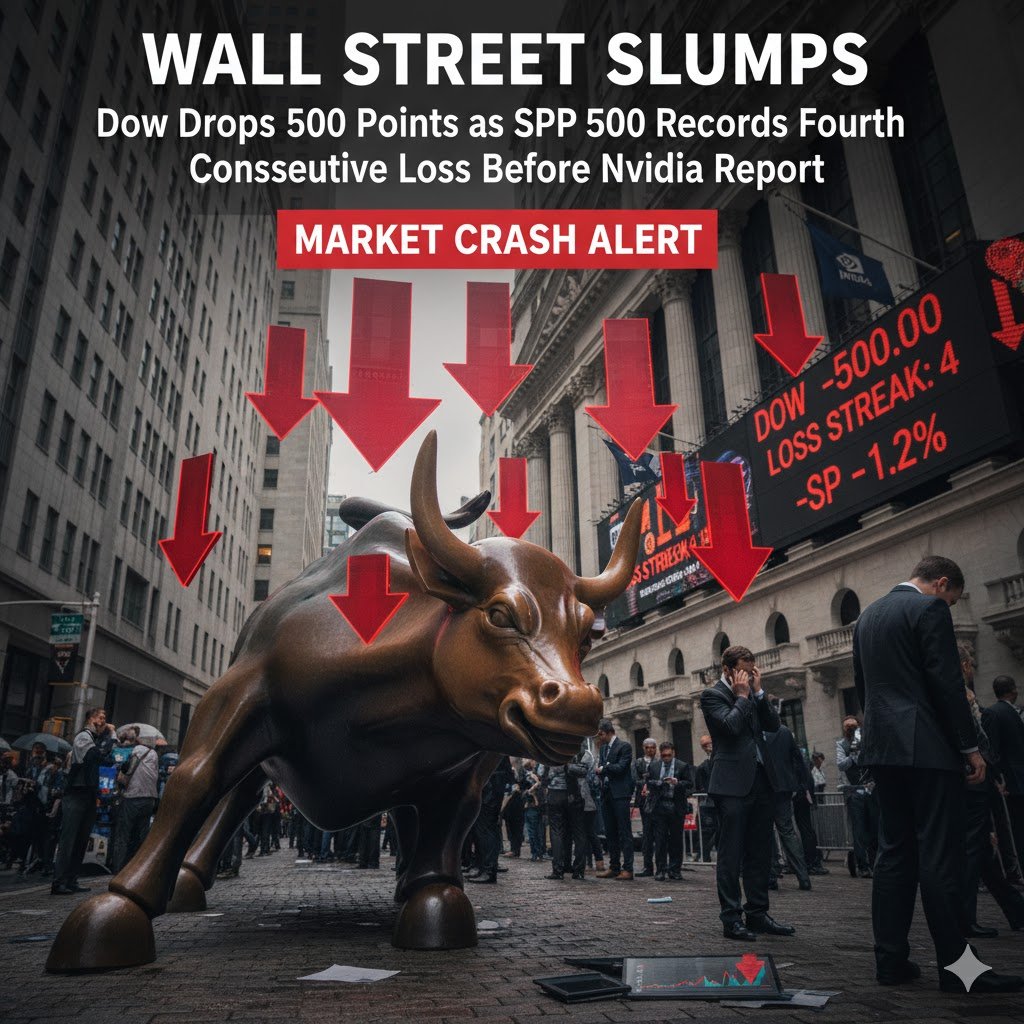
Stock Market Today Dow Slides S&P 500 Nvidia Earnings: The U.S. stock market faced a significant setback on Tuesday, November 18, 2025, as major indices slid amid a combination of valuation concerns, disappointing corporate guidance, and rising anticipation for Nvidia’s upcoming earnings report. The Dow Jones Industrial Average (Dow) dropped approximately 498.5 points, or 1.07%, closing at 46,091.74, while the S&P 500 slid 0.83% to 6,617.32, marking its fourth consecutive day of losses. The tech-heavy Nasdaq Composite also experienced a decline of 1.21%, falling to 22,432.85, reflecting broad weakness in technology and AI-driven stocks.
This latest downturn signals investor caution and illustrates the challenges facing markets after a period of strong growth, particularly in the technology sector.
Key Factors Driving the Market Decline
Tech and AI Valuation Concerns
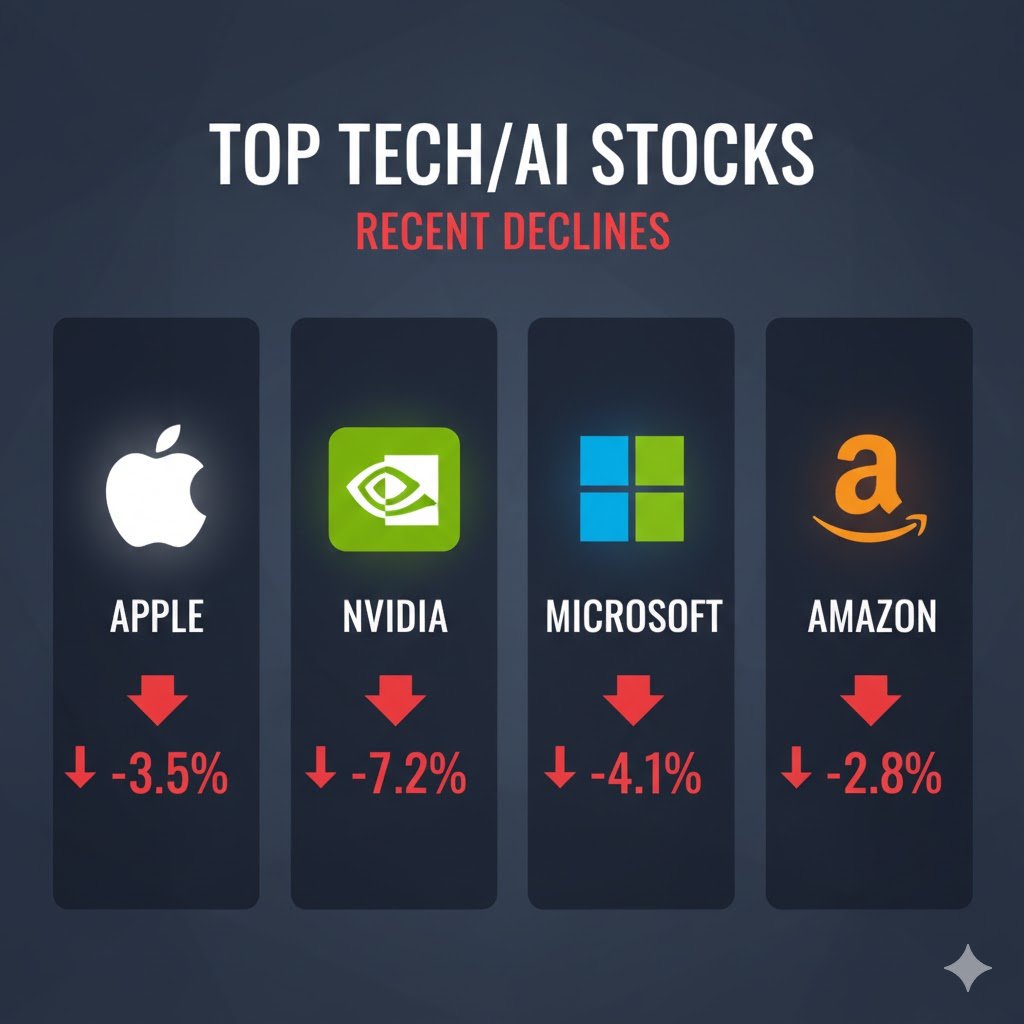
Technology and AI stocks have been the market’s growth engines in recent years, often referred to as the “Magnificent Seven” — Apple, Microsoft, Amazon, Alphabet (Google), Meta Platforms, Nvidia, and Tesla. While these stocks have delivered exceptional returns, analysts and investors are now scrutinizing whether current valuations are justified.
The rapid ascent of AI-related companies has raised concerns about an overvaluation bubble. Investors are questioning whether the anticipated growth in AI infrastructure and cloud computing is sustainable. Companies like Nvidia, which lead the AI chip and data center market, are especially under the microscope. Nvidia’s stock fell 2.8% ahead of its earnings report, highlighting investor caution.
Fading Hopes for Near-Term Fed Rate Cuts
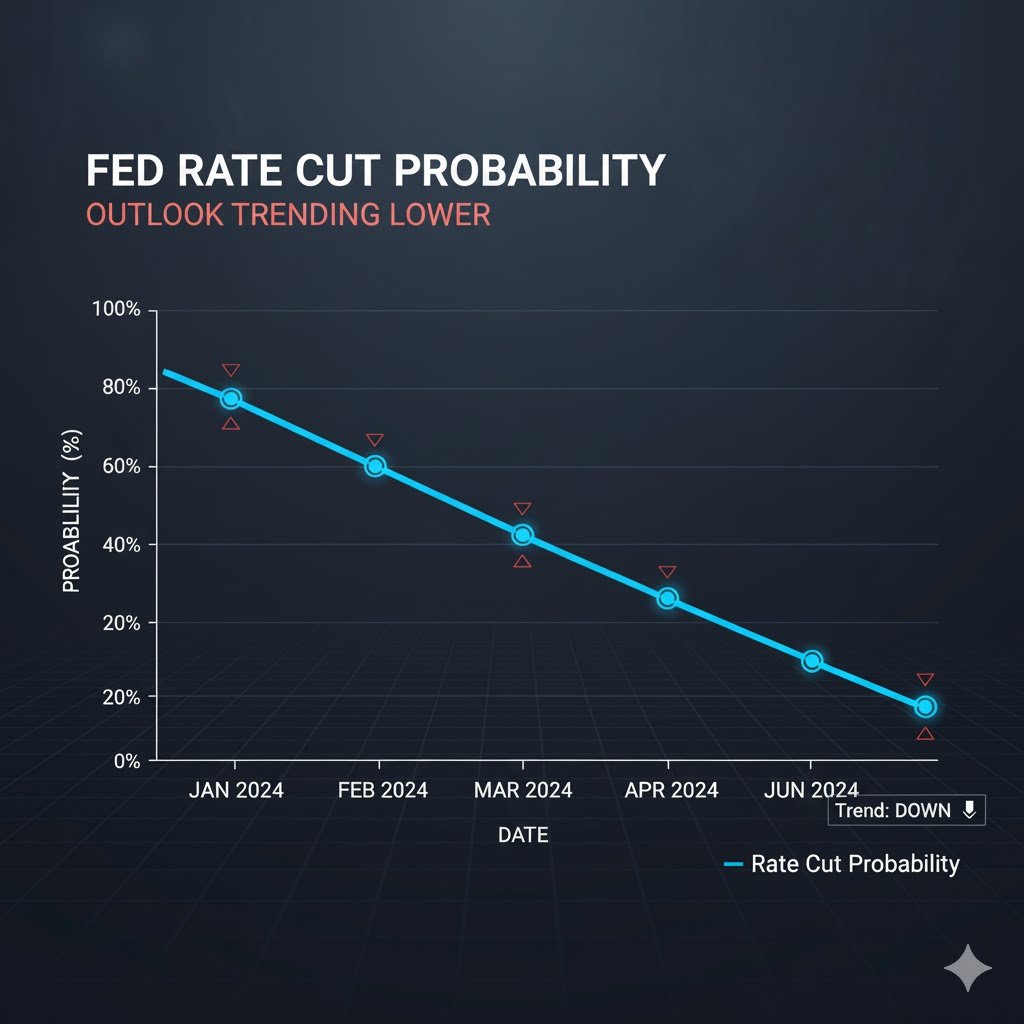
The Federal Reserve’s interest rate policy is another crucial factor influencing market sentiment. Until recently, investors had been optimistic about potential rate cuts in the near term, which would have supported high-growth, long-duration assets. However, these expectations are being tempered, suggesting that rates may remain higher for longer.
When interest rates stay elevated, the discounted value of future earnings — a key factor for growth stocks — decreases, putting pressure on stock valuations. This shift in rate expectations has contributed to selling pressure, particularly in the tech sector.
Company-Specific Disappointments
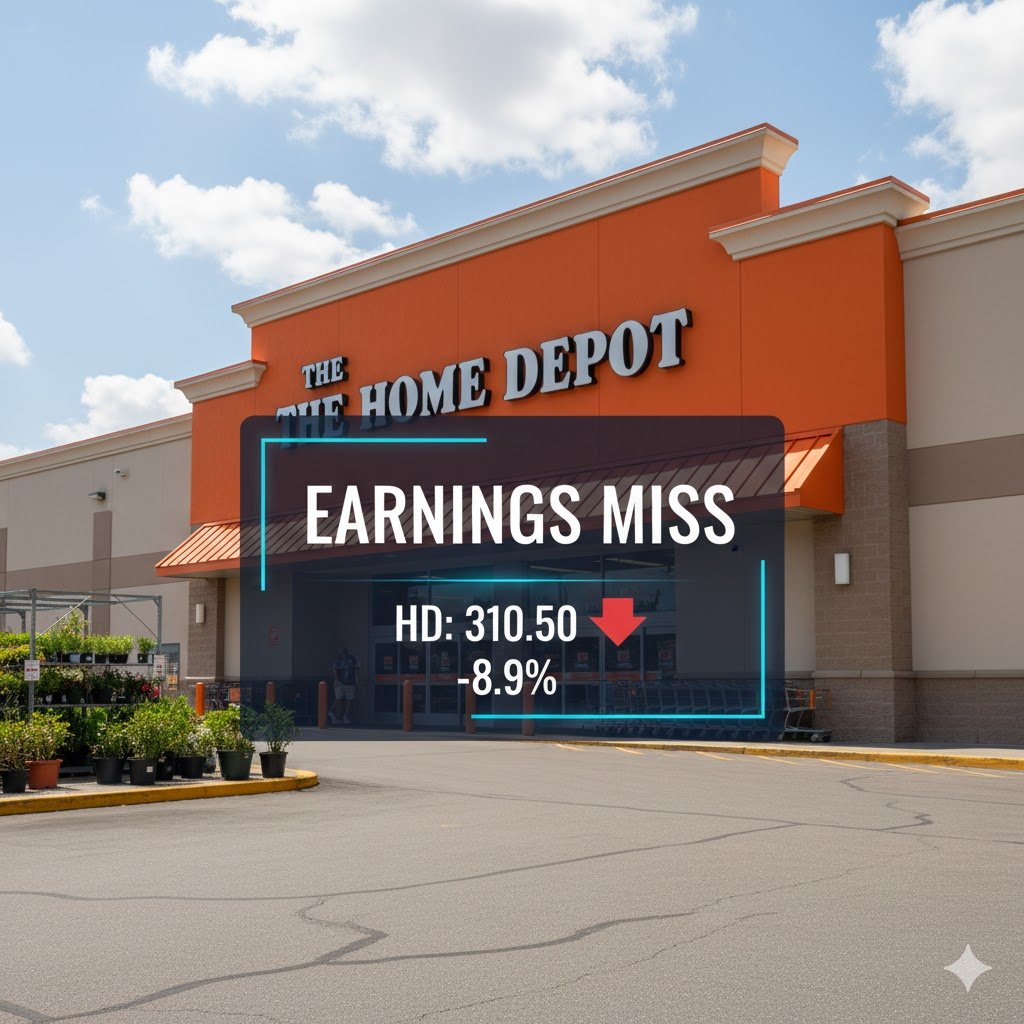
Apart from macro factors, corporate earnings and guidance have also weighed on the market. For example, Home Depot reported earnings below expectations and revised its full-year guidance downward. This missed forecast raised questions about consumer spending strength in the U.S., particularly ahead of the holiday season.
Other tech giants, including Amazon, Microsoft, and Alphabet, also experienced modest declines, adding to broader market weakness. Collectively, these individual company performances contributed to a general risk-off sentiment among investors.
Global Risk-Off Sentiment
The U.S. sell-off was not occurring in isolation. European and Asian markets also showed weakness, reflecting heightened global risk aversion. Investors are concerned about potential AI market saturation, technology sector corrections, and broader economic uncertainties.
Operational risks, such as glitches from major tech infrastructure providers like Cloudflare, have amplified concerns, particularly in the technology sector, further discouraging risk-taking among investors.

Market Technicals and Indicators
As of the latest session:
- Dow Jones Industrial Average: –498.5 points (–1.07%) to 46,091.74
- S&P 500: –55.09 points (–0.83%) to 6,617.32
- Nasdaq Composite: –275.23 points (–1.21%) to 22,432.85
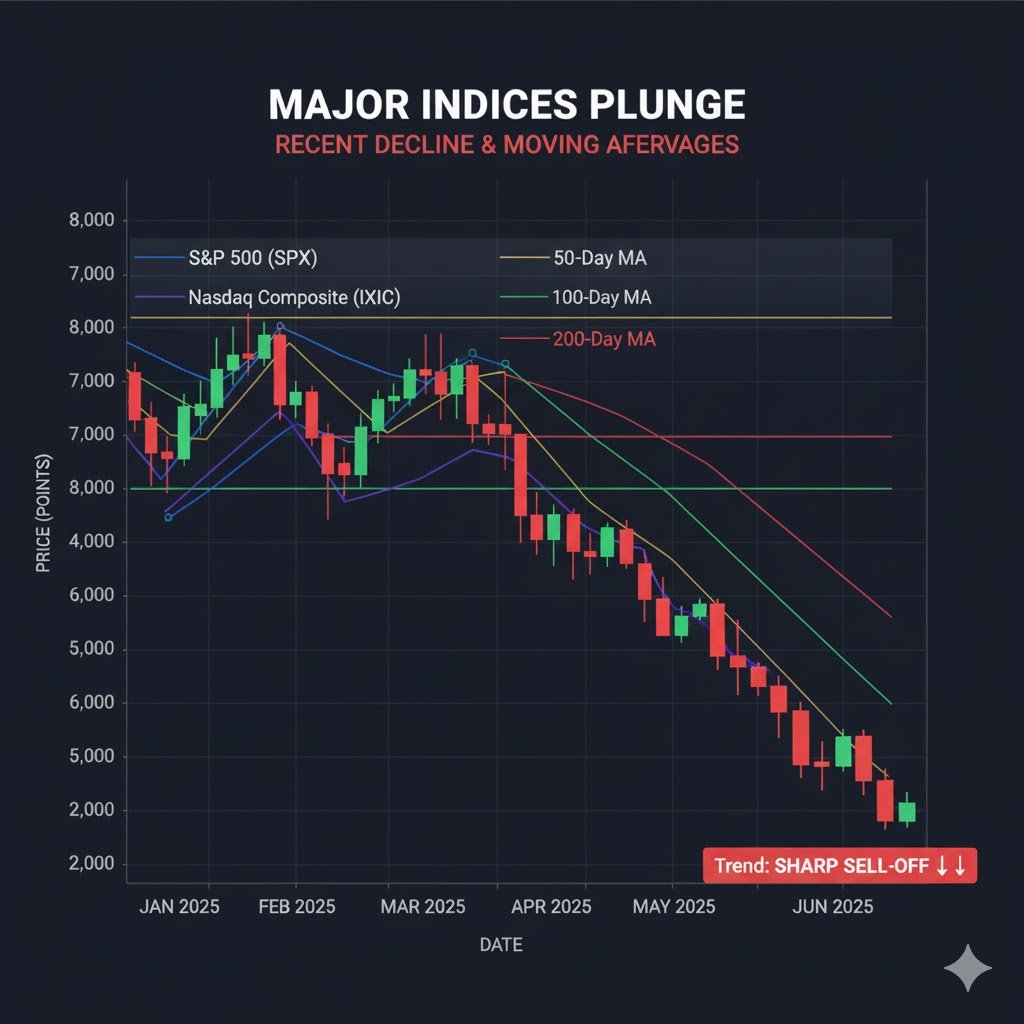
From a technical perspective, the S&P 500 and Nasdaq closed below their 50-day moving averages, which can be a warning signal for technical traders. This indicates that short-term momentum has shifted to the downside, and volatility may remain elevated.
Why Nvidia’s Earnings Are So Crucial
Nvidia’s upcoming earnings report is considered a pivotal market event. As a leader in AI infrastructure, data-center GPUs, and high-performance computing, Nvidia’s results are often interpreted as a barometer for the entire AI technology ecosystem.
Investors are closely monitoring:
- Revenue and margins: Whether Nvidia meets or exceeds expectations for AI chip sales.
- Supply chain and geopolitical risks: Any constraints that could affect global sales.
- Forward guidance: Insights into AI adoption trends and data-center demand in the coming quarters.
A strong earnings report and bullish guidance could reverse some of the recent losses and restore confidence in AI and tech stocks. Conversely, a disappointing report could deepen the correction and trigger broader market declines.

Investor Implications and Strategies
Short-Term Implications
- Heightened volatility: With four consecutive days of losses, markets may continue to experience short-term swings.
- Defensive positioning: Investors might favor defensive sectors such as consumer staples, utilities, and healthcare to mitigate risk.
- Monitoring catalysts: Upcoming earnings reports, macroeconomic data, and Fed commentary will heavily influence market direction.
Medium- to Long-Term Considerations
- Valuation discipline: Investors must be selective, especially in high-growth sectors. Stocks with overly optimistic growth assumptions are vulnerable.
- Structural growth themes remain intact: AI, cloud computing, and digital infrastructure are expected to continue expanding over the next several years. Corrections could offer buying opportunities for long-term investors.
- Interest rate sensitivity: Growth stocks remain sensitive to rate expectations. Changes in Fed policy could have lasting effects on market valuations.
Upcoming Economic and Market Events
Investors should pay attention to several key events in the coming days:
- Nvidia Earnings Report: Expected to significantly influence tech and AI sector sentiment.
- U.S. Economic Data: Non-farm payrolls, inflation, and manufacturing data could reshape Fed policy expectations.
- Global Markets: Movements in European and Asian markets may impact U.S. sentiment.
- Corporate Earnings: Retailers such as Target, Lowe’s, and Home Depot will provide insight into consumer spending trends.
- Volatility Indicators: Monitoring the VIX (Volatility Index) can provide signals of rising or declining market stress.
Final Thoughts
The recent downturn highlights the market’s shift from exuberance to caution. While the sell-off has caused short-term losses, it also serves as a reminder of the importance of valuation discipline, risk management, and monitoring key catalysts such as earnings and macroeconomic data.
For long-term investors, structural growth themes like AI, cloud computing, and digital infrastructure remain intact. While near-term turbulence is likely, these sectors could still offer opportunities for selective investments at more reasonable valuations.
Investors should remain vigilant, diversify portfolios, and monitor upcoming Nvidia earnings and macroeconomic data, which will shape the next phase of market trends. The current environment emphasizes the need for prudence rather than panic, balancing risk with the opportunity for growth.
FAQs – Stock Market & Nvidia Focus
Why did the S&P 500 fall for the fourth consecutive day?
The S&P 500 has been declining for four straight sessions due to several interconnected factors. Overvalued tech and AI stocks are a primary concern, as investors question whether these companies can maintain their high growth rates. Expectations for near-term interest-rate cuts have also weakened, reducing support for growth-focused investments. Additionally, some companies released earnings that missed forecasts or offered cautious guidance, adding to the negative sentiment. Overall, the market is in a risk-averse phase, causing investors to sell off positions and seek safer assets.
What led the Dow Jones Industrial Average to drop around 500 points?
The sharp drop in the Dow was largely influenced by underperformance in large-cap and technology stocks. Investors are taking a cautious approach ahead of major earnings releases, especially from Nvidia and other AI-focused companies. The combination of high valuations and uncertainty about upcoming corporate results led many market participants to reduce their exposure, resulting in the Dow losing roughly 500 points.
How critical are Nvidia’s earnings for the market?
Nvidia’s earnings report is extremely important for market sentiment. As a leading company in AI chips and data-center hardware, Nvidia acts as a benchmark for the entire AI and technology sector. Its revenue, profit margins, and forward guidance can influence investor confidence not only in Nvidia but across other growth and tech stocks, which in turn affects major indices such as the S&P 500 and Nasdaq.
What are the main risks facing growth and tech stocks?
Several risks are currently putting pressure on growth and tech stocks:
- Slower growth or cautious guidance from top tech companies like Nvidia, which can dampen optimism.
- Sustained high interest rates, which reduce the present value of future profits for growth stocks.
- Overvaluation concerns, particularly in AI and other high-growth sectors, which may trigger profit-taking.
- Macro and geopolitical uncertainties, which can increase market volatility and lead to a risk-off environment.
Is this the beginning of a bear market?
Not necessarily. While the recent declines have created volatility, this appears to be more of a market correction rather than a full-blown bear market. The drop is mainly driven by revaluation of overhyped sectors and general caution. Long-term trends, including AI adoption, cloud expansion, and digital transformation, remain intact, but investors should remain careful due to narrower margins for error.
How should investors respond during this uncertain period?
Investors can consider the following approaches to navigate current market uncertainty:
- Assess exposure to high-valuation tech/AI stocks and ensure that growth assumptions are realistic.
- Include defensive assets or sectors in portfolios, such as utilities, healthcare, or consumer staples, to reduce risk.
- Track upcoming earnings reports (especially Nvidia’s) and key economic data such as inflation, jobs, and Federal Reserve updates.
- Maintain portfolio diversification to avoid over-concentration in a single sector or stock.
Which economic and corporate data are important this week?
Key events to monitor include:
- Nvidia earnings and guidance, which could influence the broader tech and AI market.
- U.S. economic indicators, including employment figures, inflation reports, and manufacturing data, which shape expectations for interest-rate policy.
- Retail earnings from companies like Home Depot, Target, and Lowe’s, providing insight into consumer spending trends.
- Technical signals in the market, such as whether major indices hold or break key support levels, which can affect short-term market sentiment.