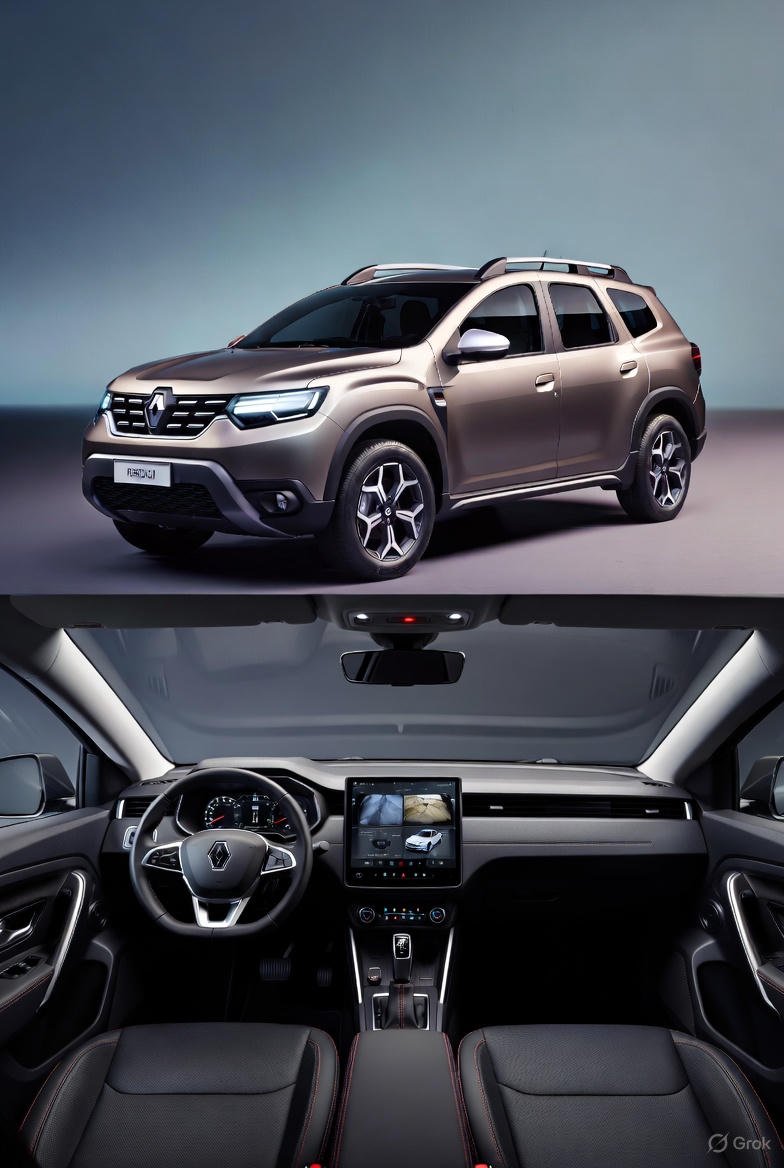
Renault Duster 2026 is finally making its blockbuster comeback in India, and the entire country is counting down the days. After disappearing from showrooms for almost three years, the legendary nameplate that created the affordable compact SUV segment in 2012 is all set to be unveiled on Republic Day – 26 January 2026. On the evening of 28 October 2025, Renault India dropped a single teaser with the line “The Legend is Back” and broke the internet. This is the full story of how the most-loved SUV in India is returning bigger, tougher and more advanced than ever before.
The new, third-generation (globally fourth-generation) Renault Duster will be unveiled in its full Indian specification on January 26, 2026 – Republic Day. Bookings are expected to open the same week, with deliveries starting by March-April 2026. This is not a facelift, not a rebadged Nissan, and definitely not a half-hearted comeback. This is Renault swinging for the fences in the most crowded, cut-throat segment in the country. Here’s why the 2026 Duster has the potential to do what the original did thirteen years ago – rewrite the rulebook.
The Emotional Connect Nobody Else Has
Very few cars in India enjoy the kind of cult following the first Duster built. It was the car that made city-bred youngsters believe they could drive to Spiti in winter without selling a kidney. It was the car that small-town doctors, contractors, and tour operators trusted with their lives on broken highways. It was boxy, unpretentious, and brutally honest – qualities that are rare in today’s sea of over-styled, over-priced crossovers.
When Renault stopped production, the used-car market went berserk. A clean 2019-2020 Dust ers still command ₹8-10 lakh even in 2025, sometimes more than a brand-new Creta base model. That residual value tells you everything about the love people still have for the name. Hyundai, Kia, Tata, and Mahindra can throw sunroofs and Level-2 ADAS, and ventilated seats at buyers, but none of them can sell nostalgia the way Renault can with a single silhouette.
Built in India, for India – This Time for Real
The old Duster was always a Romanian-designed, Indian-assembled car. The new one flips the script. The entire exterior and interior have been tweaked by Renault’s design centre in Mumbai and the engineering team in Chennai. The wheelbase has been stretched by 35 mm over the global model to liberate more knee-room for rear passengers – a classic Indian requirement. The suspension is 18 mm taller than the European version, and the underbody protection is beefier because our speed breakers are basically moon craters.
Renault-Nissan’s Oragadam plant near Chennai is running three shifts to prepare for a launch volume of 6,000-7,000 units per month from day one. Localisation is already at 82 %, with the highest ever for any Renault model in India. That directly translates into sharper pricing and faster availability of spare parts – two areas where the old Duster sometimes stumbled.
Design: Familiar, Yet Shockingly Fresh
Close your eyes and picture the original Duster’s boxy shape. Now open them and look at the 2026 model. The broad shoulders, upright stance, and high bonnet are all there, but everything else has moved a generation ahead. The front face wears Renault’s new “Nouvel R” logo framed by sleek C-shaped LED DRLs that look like angry eyebrows. The grille is massive, almost Jeep-like, finished in matte black with chrome studs. The bumper has silver skid plates that actually look like they can take a beating.
From the side, the flared wheel arches and 215-section tyres on 17-inch diamond-cut alloys fill the wells perfectly. The roofline is slightly raked, and the window line kicks up sharply at the C-pillar – a subtle nod to the original while looking thoroughly modern. At the rear, Y-shaped LED tail lamps connected by a gloss-black strip give it a premium touch that punches above its expected price tag.
Step inside and the transformation is even more dramatic. The dashboard is completely new, with a layered design and soft-touch materials everywhere your elbow or knee might touch. A 10.1-inch floating touchscreen sits proud on top, tilted slightly towards the driver. Below it, piano-black panel houses physical climate control knobs – thank you, Renault, for not going full-touch crazy. The steering wheel is the same as the one in the Euro-spec C-segment cars, thick, leather-wrapped, and with proper thumb contours.
Rear passengers finally get adjustable headrests, dedicated AC vents, two Type-C charging ports, and seats that recline up to 27 degrees. Boot space is a massive 472 litres with all seats up – bigger than Creta, Seltos, and Grand Vitara. Fold the 60:40 split rear seat and you get 1,623 litres – enough to swallow two full-size bicycles without removing the front wheels.
Engines: Goodbye Diesel, Hello Smart Hybrid
The biggest heartburn for old Duster fans was the absence of a diesel engine. Renault has stuck to its guns: the 2026 Duster will be petrol-only at launch. But this is not the same old naturally-aspirated laziness.
The hero engine is a 1.3-litre TCe turbo-petrol (co-developed with Mercedes) producing 150 PS and 250 Nm – the most powerful engine in the segment below ₹20 lakh. It is mated to either a 6-speed manual or a 7-speed dual-clutch automatic, both with paddle shifters. Real-world 0-100 km/h is expected to be under 9 seconds – quicker than most rivals with bigger engines.
There is also a milder 1.0-litre three-cylinder turbo with 48V mild-hybrid assistance making 110 PS and 200 Nm, focused purely on fuel efficiency (claimed 19-20 kmpl). Both engines get idle start-stop, brake energy regeneration, and are E20 compliant out of the box.
The big surprise is the confirmation of a strong-hybrid variant by late 2026 or early 2027 – likely the same 1.8-litre E-Tech system from the Austral that delivers 200 PS combined and over 25 kmpl. Renault says the platform is already future-ready for a battery-electric version by 2028-29.
And yes – the holy grail for many – an ALL-WHEEL-DRIVE variant with the 1.3 TCe engine and manual gearbox is confirmed for the top trim. Ground clearance is 217 mm in 4×2 and 222 mm in 4×4, with approach angle of 31° and departure angle of 34°. Proper off-road hardware is back.
Features That Actually Matter
Renault has clearly studied what Indian buyers want in 2025-26:
- 360-degree camera with high-resolution feed
- Ventilated front seats
- Wireless charger + cooled glovebox
- 10.25-inch fully digital driver display
- 6 airbags as standard across all variants
- Level-2 ADAS (adaptive cruise, lane-keep, auto emergency braking) from mid variants upwards
- Electronic parking brake with auto-hold
- Powered driver seat (8-way) in top trim
- Panoramic sunroof
- Arkamys 3D sound system with subwoofer
- Connected car tech with over-the-air updates, geo-fencing, and remote AC pre-cooling
The best part? Renault promises that even the base variant will get LED headlights, 16-inch alloys, rear AC vents, and cruise control – no stripped-down poverty-spec nonsense.
Safety: Five Stars, No Compromise
The global Duster on the CMF-B platform has already scored 4 stars in Latin NCAP and Euro NCAP is testing it in early 2026. The Indian version gets additional reinforcements in the B-pillar and floor pan to meet our offset crash requirements. Expect nothing less than 5 stars in Bharat NCAP when tested.
Pricing: The Million-Dollar Question
Industry sources and dealer leaks suggest the following indicative pricing (ex-showroom):
- Base 1.0L mild-hybrid: ₹9.99 – 10.5 lakh
- Mid 1.3L turbo manual: ₹12.5 – 14.5 lakh
- Top-end 1.3L turbo DCT 4×4: ₹17.5 – 18.5 lakh
That puts it squarely against the lower and middle Creta/Seltos trims while offering more power, space, and equipment. If Renault prices it aggressively (and history says they will), the top-end Duster could be ₹2-3 lakh cheaper than equivalently equipped Korean rivals.
The Road Ahead
Renault has already has 120+ touchpoints and plans to reach 500 by 2027. Service packages are being revamped with 4 years/50,000 km free maintenance offers at launch. The company is also bringing back the old 1 lakh km/7-year extended warranty that made the first Duster legendary for peace of mind.
Final Verdict
On 26 January 2026, when the covers come off at India Gate (rumoured venue), India will witness something rare – a car company bringing back an icon and making it objectively better in every measurable way, without losing the soul that made it famous in the first place.
The 2026 Renault Duster is not just another SUV launch. It is a statement. A reminder that you don’t need German badges or 50 lakh price tags to feel special on the road. Sometimes, all you need is a tough, honest, go-anywhere machine that respects your wallet and your wanderlust in equal measure.
The king is dead. Long live the king.