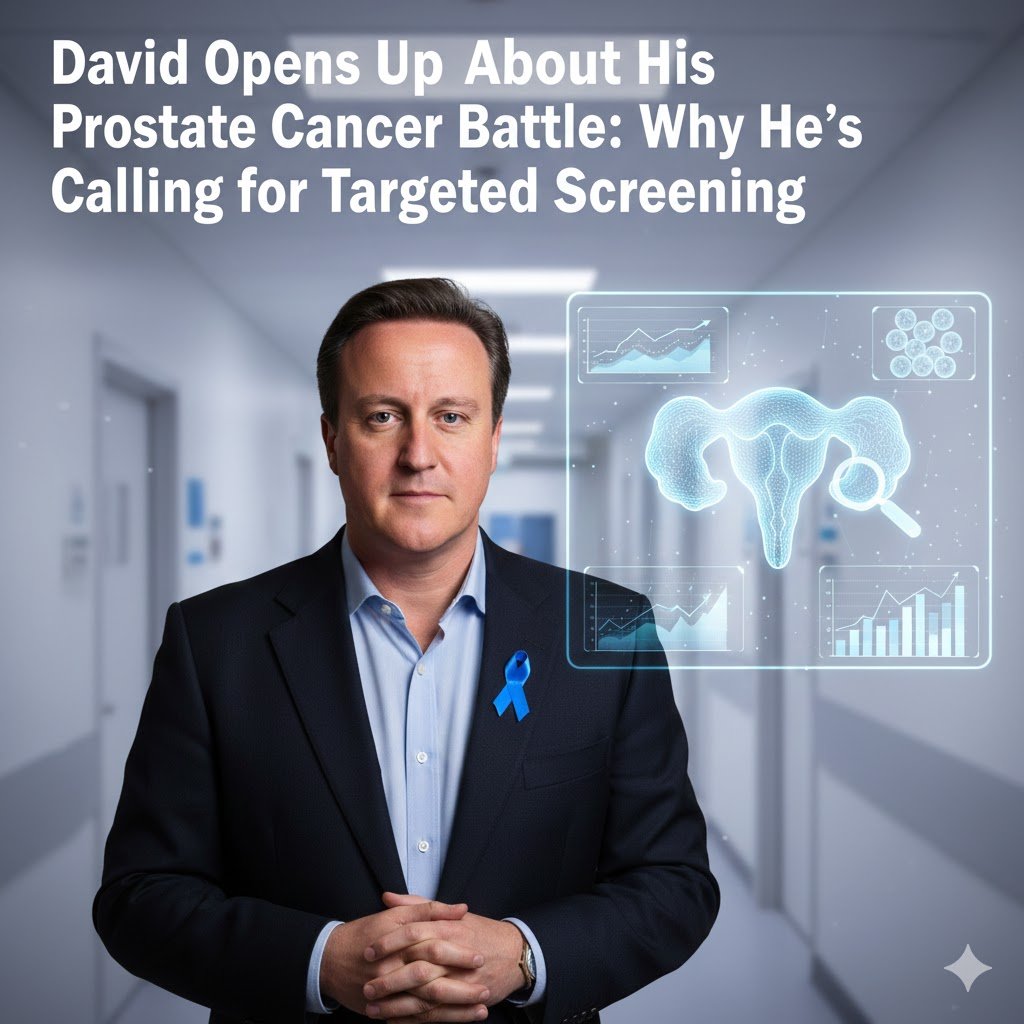
When former UK Prime Minister David Cameron — now known as Lord Cameron — publicly revealed that he had been diagnosed with prostate cancer earlier this year, the announcement immediately sparked nationwide discussion. It wasn’t just the revelation itself that caught public attention, but the deeper purpose behind it. Cameron chose to speak openly not for sympathy or publicity, but to encourage men to get tested early and to push for a new approach to prostate cancer screening in the UK.
In a country where prostate cancer has become one of the most common and deadly cancers among men, Cameron’s message has landed at a crucial moment. His story is personal, emotional, and ultimately inspiring — a reminder that early detection saves lives and that silence can be dangerous.
This is a closer look at his journey, his message, and what his revelation could mean for future health policy.
A Routine Check That Wasn’t So Routine After All
The story began with something many men often ignore: a simple PSA test. Like many husbands, David Cameron was urged by his wife, Samantha, to get checked after she heard a conversation about prostate cancer. At first, he thought it would be just another routine medical exam — something to tick off the list and forget about. But the results told a different story.
His PSA levels were unusually high, a sign that something might be wrong. High PSA doesn’t always mean cancer, but it’s an early warning that doctors never take lightly. Cameron was advised to undergo further tests, including an MRI scan.
The MRI revealed suspicious areas on his prostate — dark patches that doctors referred to as “black marks.” These marks could be harmless, but they could also be the first sign of something more serious. Within days, Cameron was scheduled for a biopsy, the procedure that would eventually confirm his diagnosis.
For a man who once led the country, faced global crises, managed diplomatic relationships, and navigated some of the toughest political moments of the last decade, this was perhaps one of the most personal and frightening challenges he had ever confronted.
He described the moment he heard the words “You have prostate cancer” as shocking and surreal — a moment that no amount of leadership experience could prepare him for.
Courage Through Early Treatment
Fortunately for David Cameron, the cancer was discovered early, and he was able to explore multiple advanced treatment options. After discussions with medical experts, he opted for focal therapy — a modern technique that targets only the cancerous parts of the prostate instead of removing or damaging the entire gland.
This treatment uses precise electrical pulses delivered through micro-needles, designed to destroy tumorous cells while protecting healthy tissue. The result is a less invasive, more targeted procedure with faster recovery and fewer long-term side effects.
After undergoing treatment earlier this year, Cameron had follow-up scans and assessments. The results brought relief not just to him and his family but to his supporters and colleagues as well: the cancer was successfully removed, and he is now cancer-free.
But this personal victory was only part of the story. What Cameron chose to do next is what sets him apart from many public figures who prefer to keep health battles private.
Why He Broke His Silence
Talking about prostate health is not easy for men. It involves topics many feel uncomfortable discussing — from urinary issues to sexual health. David Cameron openly admitted that he wasn’t exactly enthusiastic about sharing such private details.
However, he said he felt a responsibility to speak up. If someone in his position — with national influence, experience, and public visibility — remained silent, then how could he expect everyday men to take prostate cancer seriously?
Cameron believed that sharing his diagnosis could:
- Encourage more men to get tested
- Reduce the stigma around prostate health
- Lead to earlier detection for thousands of men
- Save lives that might otherwise be lost
This choice was not political but deeply personal. As he put it, “I would feel bad if I didn’t come forward. Early testing gave me the chance to treat it before it became worse. Others deserve that chance too.”
Calling for Targeted Screening Across the UK
One of the strongest messages David Cameron delivered after his recovery was the need for targeted prostate cancer screening. He is not asking for random or universal testing of every single man in the country. Instead, he advocates for structured screening that focuses on those at high risk.
According to Cameron, targeted screening could include:
- Men over the age of 50
- Men with a family history of prostate cancer
- Men with genetic predispositions
- Men from communities with higher risk profiles
This approach would balance the benefits of early detection with concerns about overdiagnosis. The current challenge with prostate cancer screening is that PSA tests sometimes pick up harmless cancers that may never grow or cause harm. This can lead to unnecessary biopsies, anxiety, and surgeries.
But Cameron believes medical technology has improved significantly. Modern MRI scans, enhanced diagnostic tools, and better methods like focal therapy allow doctors to distinguish aggressive cancers from harmless ones more accurately.
By adjusting national screening policies to reflect today’s advanced medical tools, he argues, the country can save thousands of lives without overwhelming the system.
The Wider Impact: Why His Voice Matters
As a former prime minister and one of the most recognized political figures of the last decade, David Cameron’s words hold weight. When he speaks about a public health issue, millions listen — including policymakers.
Prostate cancer is now one of the biggest health issues facing men in the UK:
- It is one of the most commonly diagnosed cancers in men
- Tens of thousands are diagnosed every year
- Thousands die annually because they were diagnosed too late
Cameron’s call for targeted screening may push the government and the NHS to revisit their approach. With the UK already running advanced research trials and looking at new screening models, his voice adds momentum to a movement already gathering speed.
His message is not just for governments or doctors — it is for sons, brothers, fathers, husbands, and every man who thinks he is “too busy” or “too healthy” to get checked.
A Human Story Beyond Politics
What makes this revelation so powerful is that David Cameron spoke not as a politician but as a husband, a father, and a man who faced a frightening diagnosis. His experience shows that cancer does not care about status, career, or past achievements. It can affect anyone — even those who seem strong, confident, and in control.
By choosing transparency, Cameron has helped create a space where men feel more comfortable discussing their health. His story humanizes the conversation, reminding society that talking about prostate cancer is not embarrassing — it is necessary.
A New Chapter in Advocacy
With his treatment completed and his recovery progressing well, David Cameron has turned his energy toward raising awareness. His advocacy is already beginning to influence public conversation around cancer screening, personal health responsibility, and early detection.
He hopes his journey will encourage other men to:
- Listen to their bodies
- Attend routine health checks
- Discuss concerns openly with their partners or doctors
- Take prostate cancer seriously
- Get tested early rather than waiting
If even a small percentage of men follow that advice, Cameron’s honesty will have saved lives.
Conclusion: A Personal Battle With a Public Purpose
David Cameron’s revelation about his prostate cancer diagnosis is more than a headline. It is a powerful story of vulnerability, resilience, and responsibility. His decision to speak out highlights the importance of early detection and the need for improved, targeted screening programs in the UK.
By sharing his personal journey, he has transformed a private struggle into a national conversation — one that could bring long-term change in health policy and help protect thousands of men in the years to come.
His message is simple but vital: men should not wait. Early testing can save lives, just as it saved his.