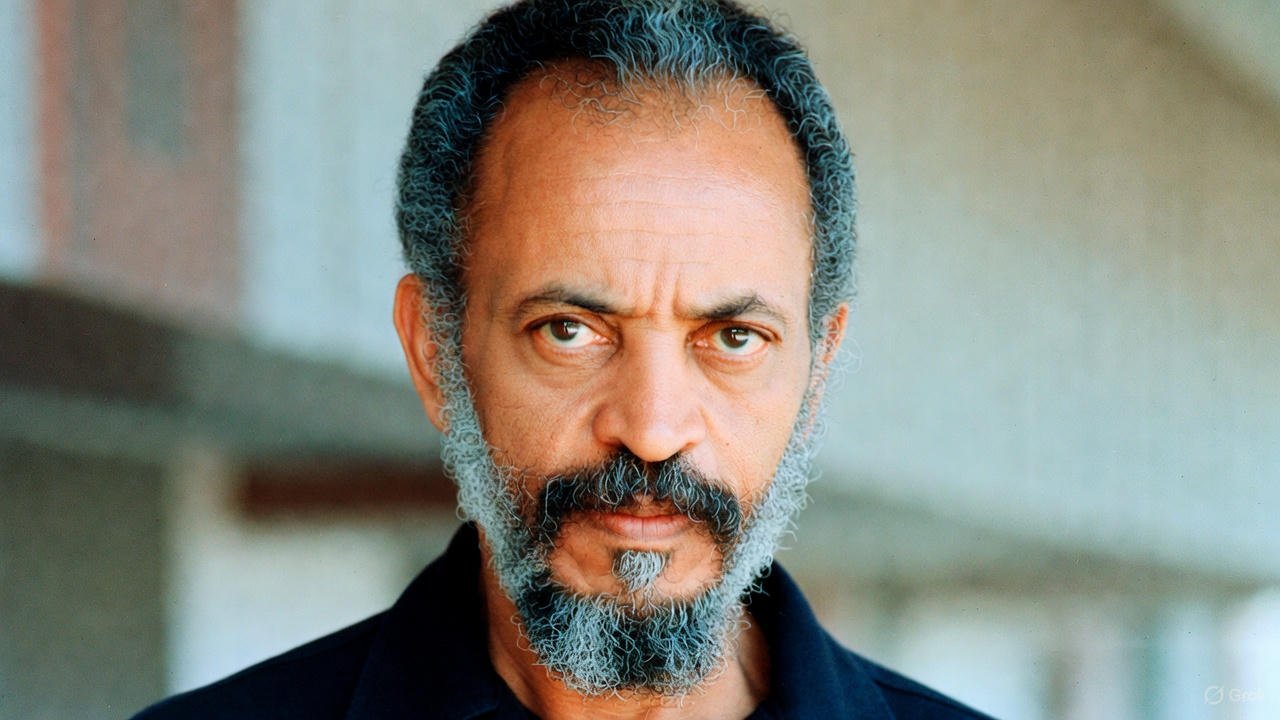
In the dim corridors of a federal prison hospital in Butner, North Carolina, a voice that once thundered against the machinery of white supremacy fell silent. Jamil Abdullah Al-Amin, the revolutionary cleric and former civil rights agitator better known in his youth as H. Rap Brown, passed away on November 23, 2025, at the age of 82. His death, attributed to complications from multiple myeloma—a blood cancer he had battled for over a decade—marks the end of a life that burned with unyielding intensity, from the fiery rallies of the 1960s to the quiet mosques of Atlanta’s West End. Al-Amin’s journey was one of transformation: from a street-smart orator calling for armed rebellion to a bearded imam preaching community uplift and spiritual redemption. Yet, it was also shadowed by controversy, incarceration, and a conviction that many of his supporters to this day insist was a miscarriage of justice.
Born Hubert Gerold Brown on October 4, 1943, in the humid heart of Baton Rouge, Louisiana, young Hubert grew up in a world where Jim Crow’s iron grip squeezed the life out of Black dreams. The son of a bricklayer father and a mother who worked as a domestic, he navigated the segregated streets of the South with a sharp wit and an even sharper sense of injustice. His older brother, Ed Brown, was his first guide into the fray of activism. Ed, a budding organizer himself, dragged Hubert to meetings of the Nonviolent Action Group (NAG) during summers in Washington, D.C., where the teenager absorbed the raw energy of protests against lunch counter discrimination and voter suppression. By 1960, at just 17, Hubert had left Baton Rouge for the nation’s capital, enrolling briefly at Southern University before transferring to Howard University. But books and lectures took a backseat to the streets; the civil rights movement was calling, and he answered with the fervor of youth unscarred by defeat.
It was the summer of 1963 that truly ignited him. Hubert traveled to Cambridge, Maryland, alongside fellow activist Cleveland Sellers, to witness Gloria Richardson’s bold campaign against racial terror. There, amid the first clashes between Black protesters and white mobs—clashes that erupted into riots—he saw something revolutionary: armed self-defense. No longer would Black folks turn the other cheek while shotguns loomed. “That was the spark,” a biographer later recalled, echoing Al-Amin’s own reflections in his autobiography. This epiphany propelled him into the Student Nonviolent Coordinating Committee (SNCC), where he cut his teeth on the Mississippi Freedom Summer of 1964. Registering voters under the scorching sun, dodging Klansmen, and staring down sheriffs, Brown honed a charisma that blended humor, poetry, and prophecy. By 1966, he was SNCC’s director of voter registration in Alabama’s Greene County, a rural outpost where Black ballots were as rare as fair trials.
His ascent was meteoric. In May 1967, at a tense SNCC retreat in Knoxville, Tennessee, Brown edged out rivals to become the organization’s fifth chairman, succeeding the electrifying Stokely Carmichael. Under his watch, the “nonviolent” was stripped from the group’s name—not out of bloodlust, Brown insisted, but because nonviolence had become a shield for white complacency. “We’re not against nonviolence,” he thundered in his acceptance speech. “We’re against nonviolence that means turning the other cheek while they kick you in the ass.” The times demanded Black Power, he argued, a phrase that had already electrified the movement but now carried his unmistakable stamp. Brown toured the country like a one-man whirlwind, fanning the flames of urban uprisings during what history would dub the “long, hot summer.” In Detroit, Newark, and beyond, he praised the rebellions as righteous uprisings against “the Fourth Reich”—America’s racist underbelly.
No speech defined him more than the one delivered on July 24, 1967, back in Cambridge, Maryland. Standing before a crowd of 1,000, sweat-soaked and defiant, Brown channeled the rage of centuries. “It’s time for Cambridge to explode, baby,” he declared, his voice rising like a storm. “Black folks built America, and if America don’t come around, we’re going to burn America down.” He urged the gathering to arm themselves, to make the Viet Cong “look like Sunday school teachers” with their guerrilla tactics in the cities. “I say to America, ‘Fuck it! Freedom or death!'” The words hung in the air like gun smoke. Hours later, gunfire erupted—Brown was shot in the leg by police, a Black teenager was critically wounded, and 17 buildings in the Black section of town burned to the ground. The white establishment pounced. Federal charges flew: inciting a riot, interstate transport of a firearm. Brown, ever the provocateur, surrendered dramatically at Washington’s National Airport, only to be released on bail. But the FBI’s COINTELPRO program had him in its crosshairs, labeling him a threat to be “neutralized.”
The alliance with the Black Panther Party was brief but blazing. For six months in 1968, Brown served as the Panthers’ minister of justice, bridging SNCC’s Southern roots with the Oakland group’s urban militancy. Together, they plotted against the “pig power structure,” as he called it. Yet, the law closed in. Convicted on a minor firearms charge, Brown faced five years but dodged it on appeal. Then came the chaos of 1970: Two SNCC lieutenants, Ralph Featherstone and William “Che” Payne, perished in a car bombing en route to Brown’s arson trial in Maryland—a blast some fingered as FBI foul play, others as a botched assassination by white supremacists. Brown, spooked, vanished. For 18 months, he evaded capture, landing on the FBI’s Ten Most Wanted list. His trial in absentia ended in a five-year sentence for the Cambridge melee, dismissed as a sham by his defenders.
Recapture came violently in October 1971, in a Harlem bar shootout that left Brown wounded and arrested on robbery charges. Hauled to Attica Prison, he entered a hellscape of iron bars and broken spirits. But Attica, site of the infamous 1971 uprising, became his crucible. Amid the clank of cell doors, Brown discovered Islam. He took his shahada in December 1971, shedding “H. Rap” like old skin for Jamil Abdullah Al-Amin—”beautiful servant of faith.” Prison honed his intellect; he fasted for 48 days in protest, penned fiery essays for underground journals, and emerged in 1976 a changed man. No longer the profane firebrand, Al-Amin was now a seeker of tawhid—unity under God.
Free at last, he planted roots in Atlanta’s West End, a gritty neighborhood pocked by poverty and plagued by crack’s creeping shadow. Opening a modest grocery store on Simpson Road, Al-Amin became its unofficial mayor: an imam whose sermons thundered against dope dealers and dice games as fiercely as his old speeches scorched racism. He founded the National Ummah, a network of Black Muslim communities stretching from Atlanta to the Caribbean, emphasizing self-reliance and moral discipline. “Revolution starts in the heart,” he wrote in Revolution by the Book: The Rap Is Live (1993), a slim volume blending Quranic wisdom with street savvy. His earlier autobiography, Die Nigger Die! (1969), had been a Molotov cocktail of rage; this was a roadmap to resilience. Al-Amin brokered truces between warring gangs, organized youth sports leagues like the Riyaadah competitions, and led delegations to Bosnia in solidarity with besieged Muslims. As vice president and later president of the American Muslim Council, he bridged Black nationalism and global Islam, convening summits on urban peace and justice. In 1994, he even headed a U.S. contingent to an Arabic-Islamic conference in Sudan, rubbing shoulders with figures who would later stir controversy.
For two decades, Al-Amin’s life hummed with purpose. He mentored ex-cons, fed the hungry from his store’s backroom, and prayed five times a day amid the chaos. Neighbors remember him as “the sheikh with the shotgun”—not for violence, but because he kept one behind the counter to ward off thieves, a nod to his unshakeable belief in self-defense. “He turned killers into keepers of the peace,” one former gang member told a local paper in the ’90s. Yet, the ghosts of his past lingered. Traffic stops escalated into paranoia; in 1995, an assault charge was dropped, and in 1999, cops pulled him over for speeding, uncovering a badge that sparked impersonation accusations. Al-Amin dismissed it as a honorary token from community work. The cases fizzled, but they foreshadowed the storm.
It broke on March 16, 2000. Fulton County deputies Ricky Kinchen and Aldranon English, both Black, arrived at Al-Amin’s home with a warrant for the old charges. What followed was a blur of bullets: Kinchen mortally wounded in the chest, English shot in the hip and knee. Al-Amin fled, sparking a four-day manhunt that ended in Alabama’s woods, where he surrendered clad in body armor, a 9mm pistol nearby—though fingerprints later cleared him of handling it. Blood at the scene? Tested as animal, per defense experts, but chain-of-custody snags muddied the waters. Eyewitnesses? Flawed, supporters claimed. The trial, unfolding in 2002, painted Al-Amin as a stone-cold assassin, a holdover from his Rap Brown days. Convicted on 13 counts—including felony murder—he drew life without parole, plus 30 years. “This is the system closing the book on Black resistance,” thundered his lawyer, William Kunstler, in a final plea that echoed the ’60s.
Appeals piled up like unpaid debts. The Georgia Supreme Court rebuffed in 2004; federal habeas corpus tanked in 2011. Then, in 2019, a bombshell: Otis Jackson, a mentally ill drifter, confessed in a video to the shootings, corroborated by 911 calls placing him nearby. Jackson recanted, then reaffirmed in an affidavit. Al-Amin’s Conviction Integrity Unit review in 2020 promised hope, but COVID delays and prosecutorial stonewalling stalled it. Transferred through supermaxes—Atlanta, Florence, Tucson—Al-Amin withered under a de facto gag order, his voice reduced to smuggled letters. Diagnosed with myeloma in 2014, he shuffled prisons like a ghost, landing back at Butner in March 2025 for end-stage care.
Al-Amin’s legacy defies easy summation. To civil rights historians, H. Rap Brown was the movement’s Molotov moment—a catalyst who pushed nonviolence toward Black Power’s edge, inspiring generations from the Panthers to Black Lives Matter. “He made us see that power, not pleas, changes the game,” says activist Angela Davis, who crossed paths with him in the ’60s. As Imam Al-Amin, he wove Islam into the fabric of Black liberation, influencing imams from Atlanta to Mecca. His books remain dog-eared talismans in prison libraries, urging readers to “revolution by the book” rather than the barrel. Critics, though, brand him a demagogue whose rhetoric fueled chaos, and a killer whose conviction closed a chapter on unchecked militancy.
Supporters never wavered. The Imam Jamil Action Network, born in his defense, flooded social media after his death. “From prison to paradise,” tweeted Imam Omar Suleiman, capturing the bittersweet freedom. Rallies in Atlanta’s West End drew hundreds, chanting his name under rainy skies. “He taught us to fight with faith,” one mourner said, clutching a worn copy of Die Nigger Die!. Even in silence, Al-Amin spoke: His life a testament that the struggle doesn’t end at the grave. In Baton Rouge, where it began, schoolkids now learn of the boy who became a legend. In Butner, a empty cell waits for the next unjust story. Jamil Abdullah Al-Amin—H. Rap Brown to those who feared him, brother Jamil to those who loved him—leaves a world still burning for justice. Freedom or death, indeed.