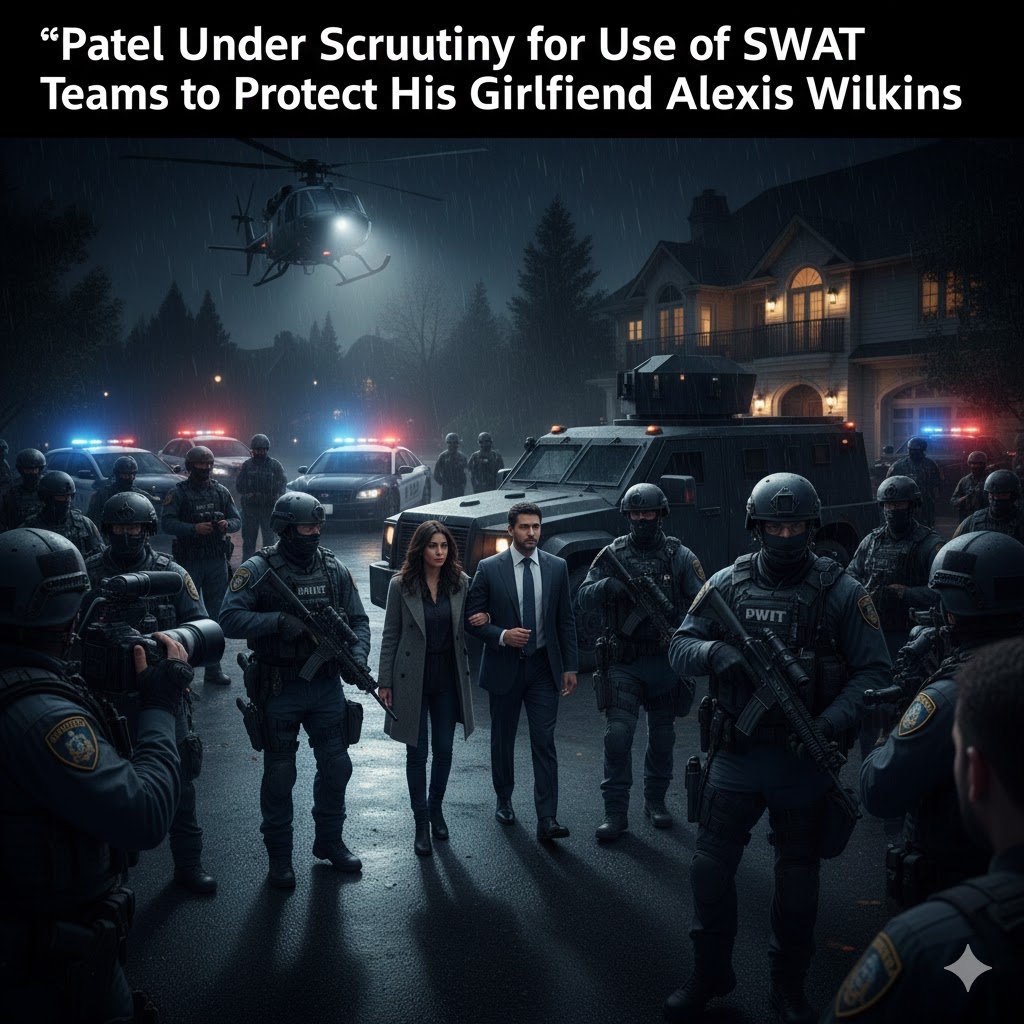
In recent weeks, FBI Director Kash Patel has come under intense public scrutiny for allegedly deploying elite SWAT agents to protect his girlfriend, country singer Alexis Wilkins. The controversy has sparked debates over the proper use of government resources, potential abuse of power, and whether established protocols for security personnel are being bypassed in favor of personal interests.
Who Is Alexis Wilkins?
Alexis Wilkins is a 27-year-old country singer who has rapidly gained prominence not only for her music but also for her high-profile relationship with Patel. Known for her patriotic themes and politically conservative viewpoints, Wilkins has cultivated a strong public persona that resonates with certain segments of the population. Over the years, she has performed at numerous political and cultural events, often drawing attention for her vocal support of national security, gun rights, and traditional values.
The relationship between Wilkins and Patel reportedly began in early 2023. Despite their closeness, the couple does not live together permanently; Patel maintains a residence in Las Vegas, while Wilkins primarily resides in Nashville. This separation has raised questions about the necessity and extent of the protective measures assigned to her.
Allegations of SWAT Deployment
The central controversy revolves around claims that Patel used FBI SWAT teams—specialized units trained for high-risk operations such as hostage rescues, armed standoffs, and dangerous tactical missions—to provide security for Wilkins. Typically, such elite agents are deployed only in life-threatening or mission-critical scenarios, making their use for personal protection highly unusual.
Reports suggest that multiple instances occurred in which SWAT agents were assigned to Wilkins’ security during public appearances, including concerts, political events, and travel across the country. One notable example was Wilkins’ performance at a national convention where FBI tactical personnel were reportedly present to ensure her safety. Sources indicate that Patel reportedly expressed dissatisfaction when agents deemed the venue safe and left before her performance concluded, suggesting that he expected continuous protection regardless of assessed risk.
Broader Deployment Patterns
This is not an isolated incident. Sources indicate that SWAT teams from multiple FBI field offices, including Nashville and Las Vegas, were mobilized for Wilkins’ protection during various events. The assignments included both her live performances and personal travels, sometimes at significant distances from the field office. Allegations also claim that agents were redirected from their standard operational duties, raising concerns about mission readiness and potential delays in responding to genuine emergencies.
Observers note that such deployments appear to follow an ad hoc pattern, with agents sometimes receiving minimal advance notice. Critics argue that this contrasts sharply with the structured planning typically associated with security assignments for high-risk personnel, where meticulous assessment of threats and resource allocation is standard procedure.
Ethical and Legal Concerns
Several former law enforcement officials and legal experts have voiced strong objections to the reported protective arrangements:
- Abuse of Authority: Critics argue that using elite law enforcement units for personal purposes constitutes an abuse of authority. Wilkins is neither Patel’s spouse nor a government official, making the justification for such intensive protection legally and ethically questionable.
- Resource Misallocation: Elite SWAT teams are strategically vital for high-risk law enforcement operations. Diverting these agents for personal security could compromise the agency’s ability to respond to emergencies effectively, creating potential public safety risks.
- Liability Risks: Deploying tactical personnel outside the scope of traditional assignments may expose both agents and the agency to legal and civil liabilities, especially if force is used in situations beyond the purview of standard protective duties.
- Precedent Concerns: Allowing such protective measures for a non-official, personal relationship sets a potentially dangerous precedent, opening the door for future leaders to misuse federal resources for private purposes.
Public and Political Backlash
The news has elicited strong reactions from both political commentators and lawmakers. Some members of Congress have questioned whether the use of SWAT teams in this context violates ethical guidelines and whether government resources are being used appropriately.
Critics have highlighted a perceived double standard: while elite protection is being afforded to Wilkins, other individuals with credible threats—sometimes including public officials—do not receive the same level of protection. This disparity has fueled accusations that personal connections and favoritism are influencing critical operational decisions within the agency.
Patel’s Defense
In response to criticism, Patel and the FBI have defended the protective arrangements. They argue that Wilkins has faced a significant number of credible threats due to her public profile and association with the FBI director. According to official statements, these threats justified the deployment of tactical teams to ensure her safety.
Patel himself has publicly praised Wilkins, describing her as a “true patriot” and emphasizing his commitment to her well-being. Supporters argue that given the nature of the threats, a heightened security posture is reasonable, even if it involves personnel typically reserved for high-risk tactical operations.
Potential Implications
This situation raises several important questions for law enforcement ethics, public policy, and administrative oversight:
- Limits of Authority: To what extent should government officials be able to use federal resources for personal reasons? Does a romantic relationship warrant the deployment of elite tactical personnel?
- Operational Readiness: Diverting specialized units from their standard roles could compromise the agency’s ability to respond to emergencies. Maintaining mission readiness while managing personal protection responsibilities presents a complex challenge.
- Accountability: Without clear oversight, similar arrangements could normalize the misuse of federal resources, eroding public trust in law enforcement institutions.
- Ethical Standards: Government officials are expected to adhere to high ethical standards, balancing personal interests with public responsibility. Situations like this test the boundaries of acceptable conduct in public office.
Analysis of the Situation
Experts suggest that even if the deployment is technically legal, the optics of the situation are problematic. The extensive use of high-level tactical personnel for the personal protection of a romantic partner risks undermining confidence in both the FBI and government oversight mechanisms. Public perception matters as much as legal compliance in maintaining institutional integrity.
Furthermore, the apparent frustration expressed by Patel when agents adhered to standard protocols raises questions about managerial discretion and the prioritization of personal interests over professional guidelines. Such dynamics could have lasting implications for morale within tactical units, potentially affecting recruitment, retention, and operational cohesion.
The Role of Media and Public Opinion
Media coverage has amplified the scrutiny, drawing attention not only to the protective measures themselves but also to broader debates about power, privilege, and accountability in government institutions. Social media platforms have seen heated discussions, with some users defending Patel and Wilkins as individuals deserving of security due to credible threats, while others denounce the deployment as an abuse of authority and misallocation of public resources.
Public discourse emphasizes the tension between individual safety and the responsible use of government resources. While protecting citizens from credible threats is a legitimate priority, questions arise when elite tactical resources are used in ways that appear discretionary rather than mission-driven.
Looking Forward
As the controversy continues, several outcomes are possible. Oversight committees may initiate investigations to evaluate the legality and appropriateness of the deployments. Internal reviews within the FBI could lead to stricter guidelines regarding personal security assignments and the use of specialized personnel for non-official purposes.
Additionally, the situation underscores the need for clear policies governing the intersection of personal relationships and professional responsibilities in government roles. By addressing these questions proactively, agencies can prevent potential abuses, maintain public trust, and ensure that resources are used effectively for their intended purpose.
Conclusion
The scrutiny surrounding Kash Patel and the deployment of SWAT teams to protect Alexis Wilkins is not just a personal matter; it reflects broader concerns about governance, ethics, and resource allocation in public institutions. While Patel defends his actions on the grounds of credible threats and personal responsibility, critics argue that the use of elite tactical resources for personal purposes is unprecedented and potentially damaging to public trust.
This situation serves as a cautionary tale about the delicate balance between personal relationships and professional obligations, emphasizing the importance of transparency, accountability, and adherence to ethical standards. As debates continue, both within government and among the public, the resolution of this controversy will likely have lasting implications for leadership practices, law enforcement ethics, and the perception of government integrity.