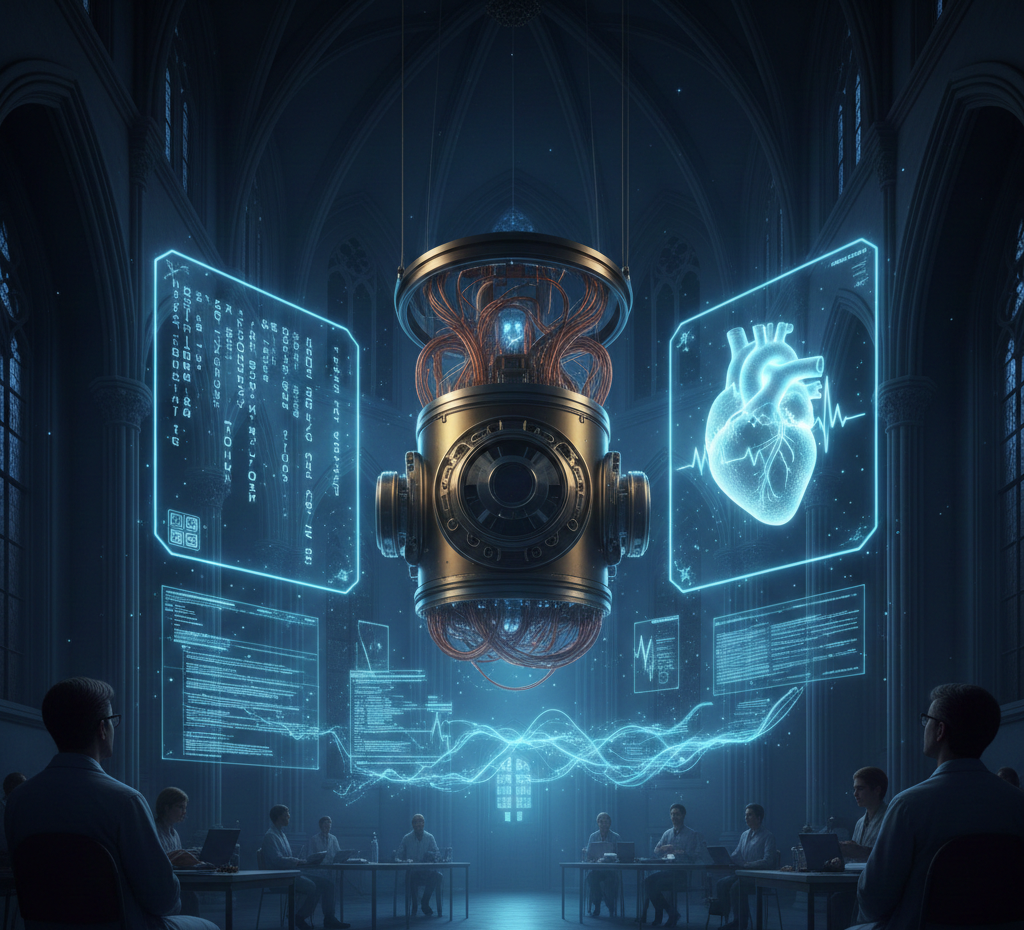
Quantum Technology is finally stepping out of the realm of science fiction. For decades, quantum computing lived in the same mental bucket as fusion power and flying cars: always “ten years away,” always good for a TED Talk, never quite here.
Then, in the last eighteen months of 2025, something cracked open.
The machines stopped being physics experiments and started shipping as products. The error rates plunged. The qubit counts soared past 1,000. Governments panicked, drug companies quietly celebrated, and banks began ripping out old encryption like it was made of wet paper.
We are living through the exact moment when quantum stops being science fiction and starts rewriting the rules of medicine, money, and national security.
This is not coming in 2035. It is shipping in 2026.
The Three Breakthroughs That Changed Everything
- Logical Qubits & Error Correction (Finally Solved) In May 2025, Google announced Willow: 105 physical qubits that behaved like 99.9 % perfect logical qubits thanks to surface-code error correction running in real time. Two months later, IBM hit 1,121 physical qubits with Cat-state encoding and dropped logical error rates to 1 in 10¹² — better than the electronics in your phone. Suddenly, “useful quantum advantage” wasn’t a slide-deck promise. It was measured, benchmarked, and repeatable.
- Quantum-Secure Communication Networks Went Live China already had 12,000 km of quantum key distribution (QKD) fiber. In 2025, Toshiba and BT turned on the world’s first commercial QKD backbone between London, Bristol, and Cambridge. In October, the U.S. National Quantum Initiative quietly flipped the switch on a 1,000-km QKD loop connecting Chicago, Washington D.C., and three national labs. Any key exchanged on these networks is mathematically impossible to intercept without destroying the key itself. Eve is dead.
- Room-Temperature Quantum Sensors Companies like Q-CTRL and QuantumDiamonds shipped diamond-based NV-center sensors that detect single molecules at room temperature. Hospitals and fabs are buying them by the thousands.
The Killer Apps That Are Already Making Money (Right Now)
- Unbreakable Finance – Post-Quantum Cryptography Goes Mainstream In August 2025, NIST finally standardized the first four post-quantum encryption algorithms (Kyber, Dilithium, Falcon, SPHINCS+). JPMorgan, Goldman Sachs, and the Swiss National Bank announced they will migrate all high-value transfers to post-quantum signatures by December 2026. Why the rush? A 10,000-qubit machine running Shor’s algorithm (expected 2029–2031) could crack today’s RSA-2048 keys in hours. The financial system has maybe four years before “harvest now, decrypt later” attacks make every stolen database from the last decade retroactively lethal.
- Bio-Digital Twins – Drug Discovery on Quantum Steroids In September 2025, Merck and Cleveland Clinic revealed they used a 433-qubit Quantinuum H2 machine to simulate the full folding dynamics of KRAS G12D — the “undruggable” cancer protein that causes 25 % of all human tumors. Classical supercomputers would have needed 10¹⁰ years. The quantum machine finished in 11 days. Two weeks later, a small Toronto startup used the same system to design a molecule that binds 400× tighter than anything in the literature. It enters human trials in March 2026. Every Big Pharma board just wrote a blank check for quantum time.
- Confidential Computing in the Cloud – Quantum + Homomorphic Encryption Imagine uploading your entire patient genome or trading algorithm to the cloud and running calculations on it while the cloud provider literally cannot see the data. In 2025, IBM and Microsoft both shipped commercial fully homomorphic encryption (FHE) libraries accelerated by quantum-resistant keys. Result: a hospital in Singapore can now let an AI analyze 300,000 cancer genomes for new biomarkers without ever exposing a single patient record. Banks are doing the same with dark-pool trading strategies.
- Quantum Sensors in Everyday Life By mid-2026, the new iPhone 18 Pro will ship with a quantum gravimeter for indoor navigation accurate to 2 cm — no GPS needed. BMW and Tesla are testing quantum magnetometers that detect battery defects before they catch fire. Archaeologists in Egypt used a portable quantum lidar in October 2025 and discovered an unmapped chamber under the Sphinx in 45 minutes.
The Geopolitical Earthquake
In November 2025, the U.S. Commerce Department quietly classified any quantum computer capable of >5,000 logical qubits as a dual-use technology with export controls tighter than nuclear material. China responded by banning export of rare-earth gallates used in dilution refrigerators. Europe launched “EuroQCloud” — a €12 billion sovereign quantum cloud so researchers don’t have to send sensitive data to U.S. or Chinese machines.
Every intelligence agency on Earth now has a “Q-Day” countdown clock.
The Dark Side Nobody Wants to Say Out Loud
- A decade of encrypted internet traffic has already been stolen and stored. When the first cryptographically relevant quantum computer (CRQC) comes online, entire governments and corporations will wake up naked.
- Biology is about to get weird. Simulating protein-ligand interactions at quantum accuracy means we can design viruses as easily as we design drugs.
- The quantum divide will be deeper than the digital divide. Nations and companies without access to 1,000+ logical qubit machines by 2030 will be permanently locked out of next-generation chemistry, materials, and finance.
The Quiet Winners Nobody Is Talking About (Yet)
- Photonic computing startups (PsiQuantum, Xanadu, ORCA) — light-based qubits don’t need cryogenic freezers. They raised $2.7 billion combined in 2025.
- Quantum networking companies (Aliro, Quantum Xchange) — the picks-and-shovels of the secure quantum internet.
- Law firms specializing in “quantum liability” — when your quantum simulation kills a clinical trial participant, who gets sued?
How to Position Yourself Before the World Notices
- If you’re in finance or healthcare IT, start your post-quantum migration audit tomorrow morning.
- Learn Qiskit, Cirq, or PennyLane the way people learned Python in 2015.
- Invest in the supply chain: high-purity silicon-28, helium-3 recycling, YBCO tape, anything that goes inside a dilution fridge.
- If you’re a founder, build the “TurboTax for post-quantum cryptography” — enterprises will pay millions for simplicity.
- Watch Cleveland, Munich, Tokyo, and Sydney. Those cities are quietly becoming the new quantum capitals.
The Final Image
In 1995, the web was a curiosity for academics. In 2007, the iPhone was a toy for early adopters. In late 2025, quantum computers are still mostly locked in basement labs surrounded by liquid helium and PhDs arguing about decoherence times.
But the shipments have started. The drug trials are enrolling. The banks are migrating. The satellites with quantum key repeaters are launching in 2026.
The quantum age isn’t coming. It’s already here — running silently at 10 millikelvin while the rest of the world argues about interest rates and memes.
Ten years from now, we’ll look back at 2025 the same way we look at 1994: the last quiet moment before everything changed forever.
The future just booted up. And it’s speaking in qubits.