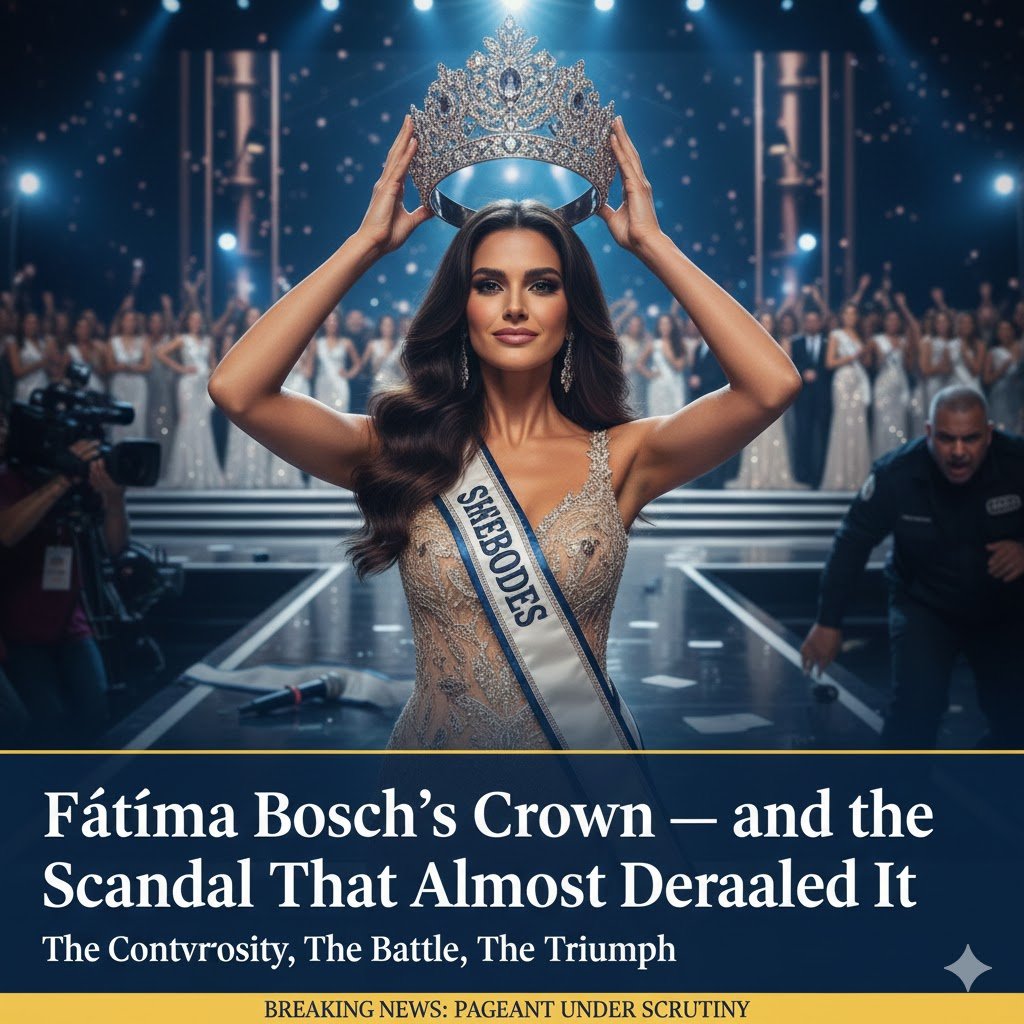
Fátima Bosch Miss Universe pageant became one of the most talked-about events of 2025 when the world watched her rise to the crown amid controversy. In November 2025, Fátima Bosch, representing Mexico, was crowned Miss Universe — but what could have been a dazzling triumph quickly turned into a dramatic tale of respect, solidarity, and scandal. Far from a routine pageant victory, her win followed a highly publicized confrontation with the pageant’s Thai director, a walkout by contestants, and serious allegations about how the competition was being run.
The Rise of Fátima Bosch
Fátima Bosch is not your typical beauty queen. At 25, she comes from Tabasco, Mexico — a region not commonly spotlighted in global pageantry — yet she managed to capture hearts and attention with her poise and conviction. Her background in design is particularly striking: she studied fashion in Mexico and even in Italy, and she is deeply passionate about sustainable fashion and social causes. Throughout her journey, she has been open about dealing with dyslexia and ADHD, challenges she says shaped her resilience rather than held her back.
Unlike many contestants who simply play by pageant rules, Bosch seems to have a clear sense of self. She is determined to use her platform not just for glamour, but to speak up, inspire, and demand respect.
The Incident That Sparked Outrage
The turning point in this Miss Universe was an incident during a live-streamed “sash ceremony” in Bangkok, Thailand, where the pageant was being held. The tension began when Nawat Itsaragrisil, a high-ranking pageant executive and national director, publicly confronted Bosch. He accused her of failing to take part in certain promotional activities, particularly related to generating social media content supporting Thailand. To many, his tone went beyond professional reproach.
According to those present, Bosch tried to explain her side. She insisted she was not being disrespectful; rather, she felt she was being misunderstood. But Nawat wouldn’t budge. In front of the assembled contestants, he called her “dumbhead” (or a “dummy”), and his language grew harsher. He even summoned security. That moment, charged and raw, was broadcast live — and the fallout was immediate.
Rather than submit quietly, Fátima rose to her feet. She told him firmly, “You are not respecting me as a woman,” and walked out of the room. Her exit inspired others. Several contestants — including past winners — got up in solidarity and followed her. It wasn’t just a protest, it was a statement: they would not tolerate disrespect.
Solidarity, Power, and a Movement
That walkout became one of the most defining images of the pageant. For many watching around the world, it wasn’t just about a personality clash — it was about power dynamics, respect, and the role of women speaking out. The fact that so many contestants backed Bosch made it a powerful, collective moment.
The public reaction was intense. Many applauded her courage. For Fátima’s supporters, this was not a superficial beauty contest; it was a platform to amplify voices, to demand dignity. Her refusal to remain silent struck a deep chord. She insisted that being graceful did not mean being submissive; that having a crown should not mean losing your voice.
The Fallout and Apologies
In the wake of the incident, the Miss Universe Organization (MUO) reacted swiftly. There was widespread backlash, and the organization publicly condemned the way Bosch was treated. They described the director’s behavior as “unacceptable” and promised to take action.
Nawat Itsaragrisil, visibly emotional, later issued a public apology. He said he never intended to hurt anyone, and that he deeply regretted the way he handled things. According to reports, the MUO also restricted his involvement in the remaining pageant events — a sign that the leadership recognized how serious the breach of respect had been.
Deeper Troubles: Judges, Accusations, and Conspiracy
But the controversy did not end with the walkout and apology. As the competition edged toward its climax, more questions emerged. Two judges resigned in the final days, which raised serious concerns about the integrity of the judging process.
One of those judges, composer Omar Harfouch, publicly stated that there had been a “secret” or “impromptu” jury that pre-selected semifinalists — in his view undermining the legitimacy of the official panel. Others pointed to potential favoritism or behind-the-scenes deals. Whether or not these claims were accurate, they added a murkiness to the already tense atmosphere.
The MUO denied that any illicit jury existed. They insisted that the standard judging procedure was followed. But the very fact that respected judges stepped down and spoke out planted doubts in the minds of many — especially among supporters who saw Bosch’s rise as exceptionally graceful amid turbulence.
The Crown Moment
Despite all the drama, the pageant went ahead in full. On the final night, Fátima Bosch walked on stage among more than 120 contestants from all over the world. She gave her best, stayed composed, and even in that high-pressure environment, her earlier stand seemed to echo in her poise.
When she was announced as Miss Universe 2025, it felt more than just a win. The applause, the cheers, the cameras flashing — this was not simply a beauty queen being crowned; it felt like a vindication. Bosch’s victory speech was heartfelt. She spoke of empowerment, of using her voice, and of wanting her reign to be defined not just by looks, but by purpose.
Reactions: Praise, Skepticism, and Debate
Back in Mexico, her crowning was hailed as a victory not just for her, but for women’s dignity. Many called her resilient, brave, and true to herself. The fact that she had spoken up so boldly against public insult — and won — made her a symbol of strength.
But not every reaction was wholeheartedly celebratory. Some critics raised questions about fairness. Was the walkout part of a larger strategy? Were the judging allegations connected to her win? For skeptics, the sudden drama, the resigning judges, and the leadership shakeups pointed to more than just conflict — they hinted at a complex power play.
Yet even amid that skepticism, many acknowledged the power of her narrative. Regardless of the backstage whispers, Fátima Bosch’s story was compelling: a woman standing up, refusing to be silenced, and claiming a global crown on her own terms.
Why This Moment Matters
The 2025 Miss Universe pageant will likely be remembered not only for its glitz and glamour, but for how it turned into a stage for a deeper conversation.
- Respect Over Spectacle
Pageants have always been about beauty, poise, and presentation. But this edition reminded the world that the heart of any human story is respect. Bosch’s refusal to be demeaned, even in front of the world, highlighted that respect matters more than image. - Women’s Voices Matter
The walkout was not just about one woman — it was about a collective voice. When other contestants joined her, it underscored how solidarity can be a powerful force. It showcased that beauty queens are not merely dancers or models, but individuals with agency and conviction. - Institutional Accountability
The fact that the Miss Universe leadership responded — restricting the director, demanding apologies — suggests that institutions cannot ignore public outcry forever. This might mark a turning point, where pageant governance is held more accountable. - A Platform for More Than Pretty
For Bosch, winning Miss Universe is not just about having a title. It is an opportunity. She intends to use her crown to highlight issues she cares about: sustainable fashion, mental health, and the importance of speaking up. Her reign could redefine what it means to be a Miss Universe. - Scrutiny of Power Dynamics
The allegations from judges, the sudden upheaval, and the tension between organizational figures exposed how much politics and power influence even glamorous competitions. It opened a window into the backstage machinery — and not just for pageant fans.
The Road Ahead for Fátima Bosch
Now begins the real work. As Miss Universe, Bosch is under expectation — not just to dazzle on stage, but to deliver impact. She has already made clear that she wants to be remembered for more than her looks. Her brand of leadership is rooted in authenticity.
If she plays her cards right, her reign could be transformative. She can bring attention to sustainability in fashion, speak for women who find themselves silenced, and inspire young people who want to do more than just follow traditional paths.
At the same time, she’ll need to navigate the backlash. The skeptics will keep watching. The controversies won’t entirely disappear. And in the world of pageantry, every word, every action is magnified. But if her walkout taught us anything, it’s that she knows how to stand firm, even under pressure.
Conclusion: More Than a Crown
Fátima Bosch’s Miss Universe 2025 title is not simply a trophy — it’s a statement. Against insult, she stood her ground. Against institutional power, she refused to be silenced. Against expectations of passivity, she embraced her voice.
Her crowning moment was not free of controversy. But maybe that’s exactly what makes it powerful. In a world that often asks women to be polite, poised, and quiet, she chose to be brave, dignified, and heard. And in doing that, she redefined what a beauty queen can be: not just someone who wears a crown, but someone who earns it through courage.
Fátima Bosch’s journey will be watched closely — but whatever happens next, she has already made an indelible mark. The Miss Universe crown she now wears may be glittering, but the real prize lies in her message: that respect matters, that voices matter, and that true leadership begins with standing up for oneself — and for others.