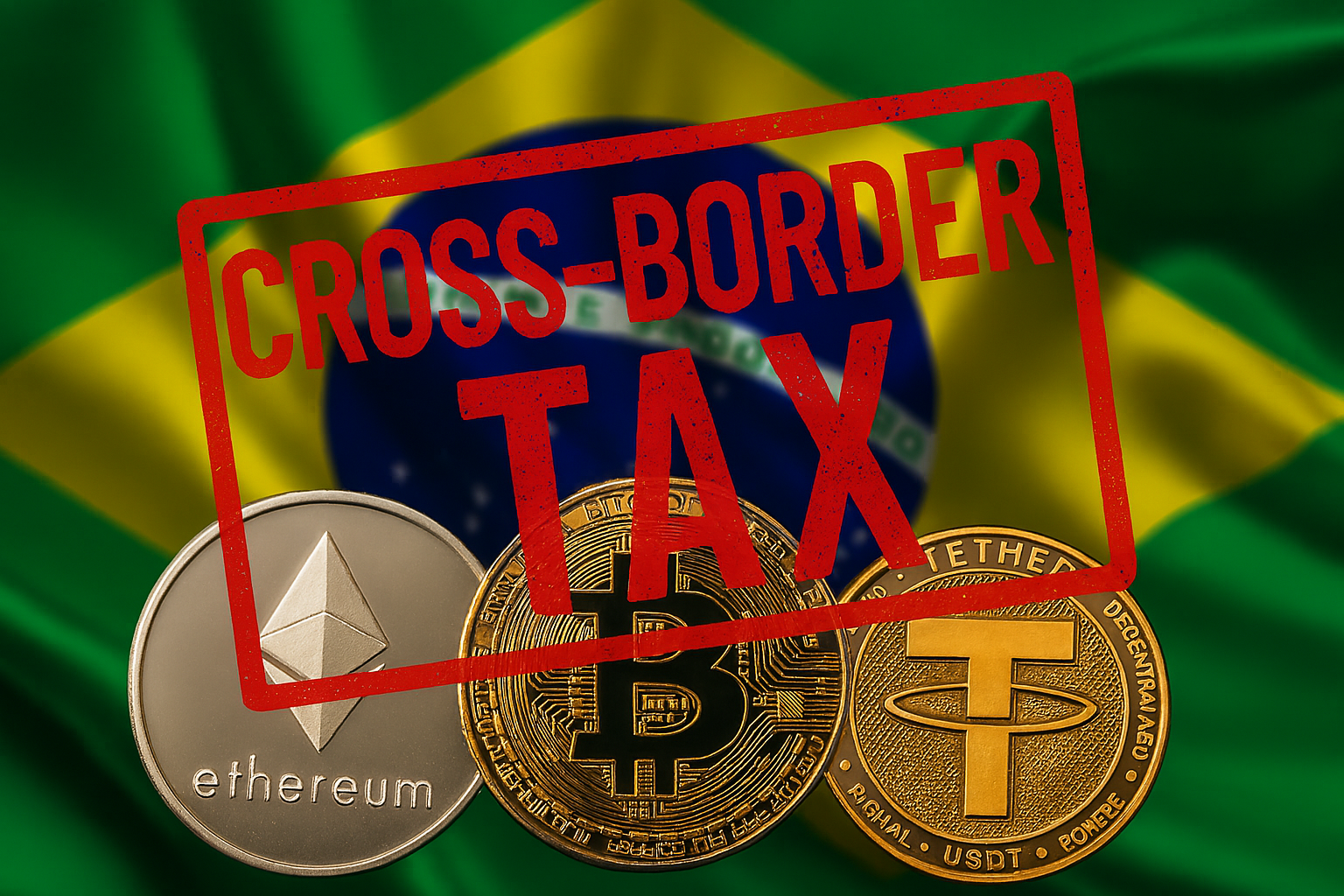
Brazil is considering a major change to how it treats cryptocurrency when used for international payments. Government officials are studying whether to extend the IOF (Imposto sobre Operações Financeiras) — the nation’s tax on certain financial operations — to cross-border transfers made with stablecoins and other virtual assets. The proposal aims to align crypto transfers with conventional foreign-exchange transactions, close an apparent loophole, and bolster tax transparency.
What’s being proposed
At the conceptual level, officials want transactions that move value across Brazil’s borders using fiat-pegged virtual assets — stablecoins — to be treated similarly to foreign-exchange (FX) operations. That would let the tax authority apply existing IOF structures to these transfers rather than letting them escape the current levy regime. The idea is not yet a finished tax bill: details such as the IOF rate, which specific transfers will be taxable, exemptions, and reporting mechanics remain under discussion.
The proposal builds on recent moves by Brazil’s central bank to reclassify certain crypto flows as FX operations. Under the central bank’s new regulations, purchases, sales or exchanges of fiat-pegged virtual assets and certain wallet transfers will be treated as foreign-exchange transactions — a change that takes effect in early 2026. This reclassification is the legal foundation that makes taxing cross-border crypto payments administratively feasible.
Why the government wants this
There are three linked motivations behind the plan.
First, revenue. Officials and sources with knowledge of the matter believe some import and cross-border payments are being settled off-book with stablecoins, reducing the IOF and customs duties collected by the state. One source cited in reporting suggested losses could be very large, claiming that imports settled via stablecoins may be under-declared and that billions in potential tax and duty revenue are being missed. Bringing those flows into the IOF net would recapture part of that revenue.
Second, regulatory consistency and risk control. Stablecoins behave, in practice, like foreign currency for payment purposes: they peg to fiat and are used to hold dollar-equivalents and move value across borders. Regulators argue it makes little sense to treat these flows as outside FX rules simply because they happen on distributed ledgers. Classifying them as FX operations subjects them to anti-money-laundering (AML) and counter-terrorist financing (CTF) rules and increases oversight of the entities that facilitate those transfers.
Third, closing a loophole and preventing arbitrage. Without clarity, firms and individuals could exploit mismatches between tax rules and the crypto payments landscape. Extending IOF would reduce incentives to use stablecoins purely to circumvent existing controls and taxes. It also improves the government’s visibility over cross-border flows, helping close channels that might otherwise be exploited for illicit finance.
The regulatory backdrop
The central bank has issued new rules formalizing a licensing and oversight regime for virtual-asset service providers (VASPs). These rules treat stablecoin trades and certain wallet transfers as FX operations and impose governance, reporting, security, and AML obligations on licensed providers. The new legal framework names regulated entities, sets reporting start dates, and sets thresholds for dealings with unlicensed foreign counterparties — all of which make IOF application operationally realistic. The central bank’s measures take effect in February 2026, with staggered implementation windows for reporting.
Under the new rules, a regulated crypto firm must identify counterparties, report cross-border transfers, and maintain internal controls on suspicious activity — responsibilities similar to those of FX brokers. For transfers that involve self-custody wallets, the rules require traceability when transactions are routed through regulated providers. These controls are the enforcement levers the tax authority would use to assess and collect IOF on taxable crypto cross-border movements.
Likely short-term impacts
If the IOF extension is enacted, several immediate effects are likely:
- Reduction in off-book import settlements: Importers who used stablecoins to partially settle invoices off-record may find this option less attractive. With IOF applied, the net cost advantage of stablecoin settlement would fall.
Higher compliance with regulated providers: Businesses and individuals may prefer to keep cross-border flows within licensed VASPs to ensure compliance and avoid penalties, bolstering the regulated ecosystem.
Market adjustment: Some users might shift to other cryptos, to on-chain strategies that fall outside the tax base, or to foreign platforms — at least until enforcement tightens. The government will likely balance deterrence with workable compliance pathways to avoid excessive flight of activity.
Medium-term and structural consequences
Longer term, the policy could reframe how cryptocurrencies are used in Brazil’s economy:
- Formalization of stablecoin payments: Treating stablecoins as FX could normalize their use in regulated trade and settlement — but under stricter oversight and tax rules. That could encourage legitimate commercial use while deterring misuse.
Revenue gains and reporting transparency: If enforcement is effective, the tax could unlock meaningful revenue and deliver clearer statistics on external flows. Improved reporting also strengthens the state’s ability to detect fraud and evasion.
Sector consolidation: Compliance costs for licensing and reporting could favor larger, established firms over smaller VASPs, potentially consolidating market share and shifting competitive dynamics.
Implementation challenges and trade-offs
Applying IOF to crypto cross-border payments is not straightforward.
- Defining the tax base: Authorities must specify which tokens and transaction types fall under IOF. Is it only fiat-pegged stablecoins? What about cross-chain swaps that briefly touch a stablecoin? Clear rules are essential to avoid endless litigation and evasion.
Tracing decentralized flows: Enforcement depends on cooperation from regulated intermediaries and technical capacity to match blockchain records with taxable events. This requires investment in monitoring and forensic tools.
Risk of regulatory arbitrage: Too heavy a tax might push transactions offshore or toward unregulated channels. Policymakers must strike a balance between deterrence and preserving innovation and legitimate business activity.
Broader significance: cross-border crypto governance
Brazil’s move would not be purely domestic policy. Emerging markets are particularly sensitive to cross-border capital flows and the fiscal leakage they can cause; a major Latin American economy treating stablecoins as FX and taxing cross-border crypto could influence others. If Brazil implements an IOF extension successfully, other countries may follow suit, creating a patchwork of rules that gradually reduces regulatory arbitrage — especially if accompanied by improved international reporting and cooperation among tax authorities.
What to watch next
- Formal proposal: Look for the Finance Ministry to publish its draft and for Receita Federal (the tax authority) to issue technical guidance on calculation, reporting and enforcement.
Industry reaction: Expect submissions from exchanges, payments firms, importers, and trade associations. Their input could shape rates, thresholds, and carve-outs.
Technical rollout: Enforcement hinges on reporting systems and traceability tools; watch how quickly the central bank and Receita scale those capabilities.
Market response: Will users migrate to offshore platforms, other tokens, or compliant VASPs? Monitoring flows and prices will reveal how incentives change.
Conclusion
Brazil’s consideration of IOF taxation on cross-border stablecoin payments is a decisive regulatory response to the rise of digital-asset-based international transfers. By aligning stablecoins with foreign-exchange rules and potentially subjecting them to IOF, authorities aim to reclaim lost revenue, reduce illicit finance risks, and bring crypto payments into a regulated framework. Implementation will be technically and politically challenging: the government must design clear, enforceable rules while avoiding unintended consequences that drive activity out of the regulated system. Still, if done carefully, Brazil’s approach could set an influential precedent in how countries tax and regulate cross-border crypto payments.
FAQ
Brazil to Tax Cross-Border Crypto Payments: A New Regulatory Shift
Brazil is preparing to introduce a new tax framework targeting international cryptocurrency transactions, especially those made with stablecoins. This initiative represents a major step toward modernizing the country’s financial oversight and ensuring that digital asset flows do not bypass existing tax rules. The proposal involves extending the IOF (Imposto sobre Operações Financeiras), the nation’s financial operations tax, to crypto activities that move across borders — a category the central bank now classifies as foreign-exchange operations.
What Exactly Is Being Proposed
Brazil’s economic authorities are evaluating a plan to apply IOF taxation to crypto transfers entering or leaving the country. The move mainly targets stablecoins and other digital assets used for international payments — an area that currently falls outside the IOF’s reach.
Today, many cross-border crypto transfers are not taxed at all. Government officials argue that this is a significant loophole, allowing billions in digital transfers to move without the fiscal oversight applied to traditional currency operations.
However, the introduction of the tax is not immediate. Even though the central bank updated the classification of stablecoins and other digital assets, the actual taxation depends on further instructions from the federal tax agency. This means the IOF will apply only once the tax authority formally defines how the rule will be implemented.
Why Brazil Is Considering This Move
1. Closing Regulatory Gaps & Preventing Arbitrage
Stablecoins have become a preferred method for moving money abroad due to low cost, speed, and fewer restrictions. Policymakers argue that this creates an imbalance: traditional foreign exchange operations are taxed and regulated, while crypto-based transfers are not.
By treating stablecoins as foreign-exchange assets, the government aims to close the regulatory gap and prevent tax evasion through alternative payment channels.
2. Recovering Lost Revenue
Authorities estimate that Brazil may be losing more than US$30 billion annually because importers and traders are increasingly using stablecoins to pay for goods and services without paying IOF or customs duties.
Introducing a tax on cross-border crypto operations would help reclaim this lost revenue and strengthen public finances.
3. Improved Oversight & Risk Management
Regulators have raised concerns about the use of stablecoins for:
- money laundering
- illicit financing
- capital flight
- untraceable payments
Because stablecoin transfers bypass the traditional banking system, they are harder to monitor. The new framework requires crypto providers to comply with strict AML and CTF rules, increasing transparency and aligning digital transfers with Brazil’s financial surveillance standards.
The Regulatory Framework Supporting This Plan
To prepare for the taxation of crypto-based foreign-exchange transactions, Brazil’s central bank has introduced several major regulations. These rules reshape how crypto firms operate within the country.
1. New Licensing Regime for Crypto Companies
Virtual-asset service providers (VASPs) must now be formally authorized as specialized financial institutions. They fall under a new category called Sociedades Prestadoras de Serviços de Ativos Virtuais (SPSAVs).
These institutions must meet strict requirements involving:
- governance
- cybersecurity
- risk controls
- consumer protection
- anti-fraud measures
2. FX Classification of Stablecoins
Stablecoin-related transactions — including buying, selling, exchanging, and sending them across borders — are now treated as foreign-exchange operations.
This classification makes taxation possible and brings crypto transactions under the same regulatory umbrella as traditional currency flows.
3. Self-Custody Wallet Identification
Whenever users transfer stablecoins to or from private wallets using a licensed provider, the provider must:
- identify the wallet owner
- verify the origin and destination of the funds
- maintain tracking records
This closes one of the biggest loopholes in crypto transfers: anonymous self-custody movements.
4. Limits on Unlicensed Foreign Partners
If a crypto transaction involves an unlicensed foreign provider or exchange, the transfer may be restricted to a maximum of US$100,000.
This rule aims to discourage users from bypassing Brazilian oversight by using offshore platforms.
5. Mandatory Reporting Timeline
Brazil will introduce strict reporting requirements in stages:
- February 2, 2026 – new compliance rules become active
- May 4, 2026 – mandatory reporting of cross-border crypto transactions begins
These steps will give service providers time to update their systems and processes.
Implications & Potential Impact
Impact on Crypto Users and Businesses
- Users and companies making cross-border stablecoin transfers may face additional costs due to IOF.
- Businesses may shift from informal or offshore crypto channels to regulated domestic providers to avoid penalties.
- Some users might explore alternative digital assets or off-chain methods to reduce the tax burden, changing market behavior.
Impact on Government Revenue and Control
- The new tax could generate significant revenue, especially as stablecoins dominate Brazil’s crypto activity.
- Improved reporting will give regulators better visibility into capital flows.
- The government will have stronger tools to enforce tax laws, combat illegal transfers, and maintain financial stability.
Impact on Market Structure
- Larger, well-capitalized crypto firms may benefit because they can absorb compliance costs more easily.
- Smaller companies could struggle, potentially leading to industry consolidation.
- The closer integration of stablecoin payments with financial regulation may reduce high-risk or opaque transactions.
Impact on Global Crypto Regulation
- Brazil’s model may inspire similar approaches in emerging economies facing large volumes of stablecoin inflows and outflows.
- The new rules show a willingness to integrate crypto into traditional financial oversight rather than banning or restricting it.
- Brazil’s approach may contribute to developing international standards for taxation, AML, and cross-border crypto monitoring.
Risks & Challenges
1. Implementation Difficulties
Tracking blockchain transactions and linking them to real-world identities is complicated. Regulators need sophisticated tools to monitor activity accurately.
2. User Pushback
Crypto holders who rely on stablecoins for cheap international transfers may resist the new tax, arguing it undermines decentralized finance’s benefits.
3. Capital Flight to Crypto-Friendly Jurisdictions
If regulations become too restrictive or taxes too high, users and companies may move operations to countries with more favorable crypto rules.
4. Impact on Innovation
Tighter regulations might discourage startups and innovators building blockchain-based payment systems or remittance solutions.
Broader Context & Strategic Importance
Brazil is one of the world’s fastest-growing markets for stablecoin usage. The central bank previously revealed that close to 90% of the country’s crypto transaction volume involves stablecoins — a figure that explains why authorities are focusing on this area.
Globally, governments are increasingly concerned about:
- capital controls being bypassed through crypto
- tax evasion enabled by anonymous transfers
- money laundering involving digital assets
- the rapid growth of stablecoins in international commerce
By formalizing stablecoin payments as regulated FX transactions, Brazil aims to safeguard monetary stability and bring crypto activity into the formal economy.
Politically, the move signals a strong commitment to tightening oversight while also legitimizing crypto within the country’s financial system.
What Comes Next: Key Milestones to Watch
1. Detailed Tax Guidelines
The Finance Ministry and the tax authority will define IOF rates, exemptions, and procedures. This will determine the real cost for users.
2. Public Consultation and Industry Feedback
Crypto exchanges, payment companies, importers, and banks are expected to lobby for rules that minimize compliance burdens.
3. Implementation of Tracking Technology
Authorities must develop tools to monitor cross-border stablecoin transfers and match them with tax obligations.
4. Market Response
Businesses and individuals may adjust their financial strategies. It will be important to observe whether crypto transfer volumes shrink or shift to regulated channels.
5. Policy Review and Adjustments
After implementation, regulators will assess the impact of the tax, revenue generated, compliance rates, and any unintended consequences before making further adjustments.